Own venture · Food
Co-founding FoodieStop, a food-truck business in Hyderabad
Started a fast-food truck with my brother and grew it from one truck to four in eight years: profitable within 14 months, investment paid back in three and a half years.
Auf einen Blick
- Role
- Co-founder: setup, suppliers and budget
- Period
- 2015 – 2023
- Location
- Hyderabad, India
- Growth
- From 1 food truck to 4
Hintergrund
FoodieStop is a fast-food brand in Hyderabad, India, serving Indian sandwiches and wraps from food trucks. My brother and I founded it together in 2015.
Why a food truck
Fast-food stalls were booming in India, and that was exactly the problem: in popular spots there were many of them side by side, all competing for the same customers. A fixed shop would have been stuck in that crowd.
A food truck can move. If a competitor was strong at one place in the morning, we went somewhere else and came back in the evening. Most of our customers were students, so we followed them from one university to another, especially when a campus had a special event.
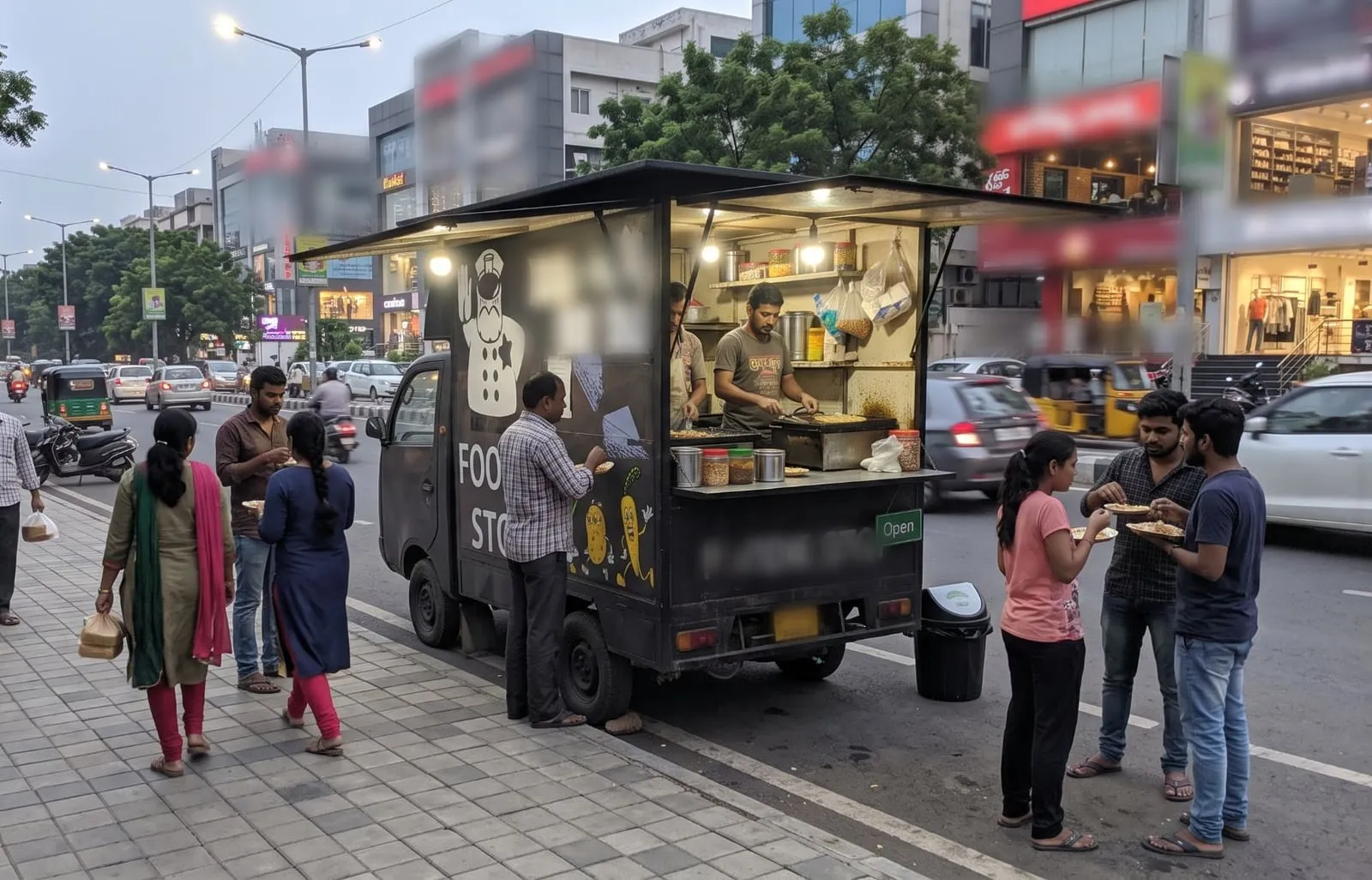
More photos and videos of the trucks are on FoodieStop’s Instagram.
How we split the work
I set up the business and managed the suppliers, my brother ran the daily operations, and we planned the budget together. Each truck had a team of three: one person taking orders, a cook, and one person keeping the truck and everything around it running.
What I did
- Wrote the business plan and analysed the local market.
- Ran a customer survey.
- Handled the licences.
- Negotiated and signed contracts with suppliers.
- Planned the budget together with my brother.
Result
FoodieStop was profitable within 14 months, paid back the full investment in three and a half years, and grew from one food truck to four. In 2023 we sold the trucks to new owners, who continue the brand today.
What I learned
FoodieStop was my first real business, and the first time I was responsible for a large investment of our own money.
Plan before you spend. Before we bought anything, we wrote a business plan, studied the local market and asked people in a survey what they would buy. A truck, its equipment and the first stock are expensive, and many of those decisions cannot be undone.
Find your own space instead of fighting for it. Competing head-on with many stalls in one place would have been a price war. Being mobile let us go where the competition was weaker and where our customers actually were. I still think about projects this way: before pushing harder, ask whether there is a smarter position to work from.
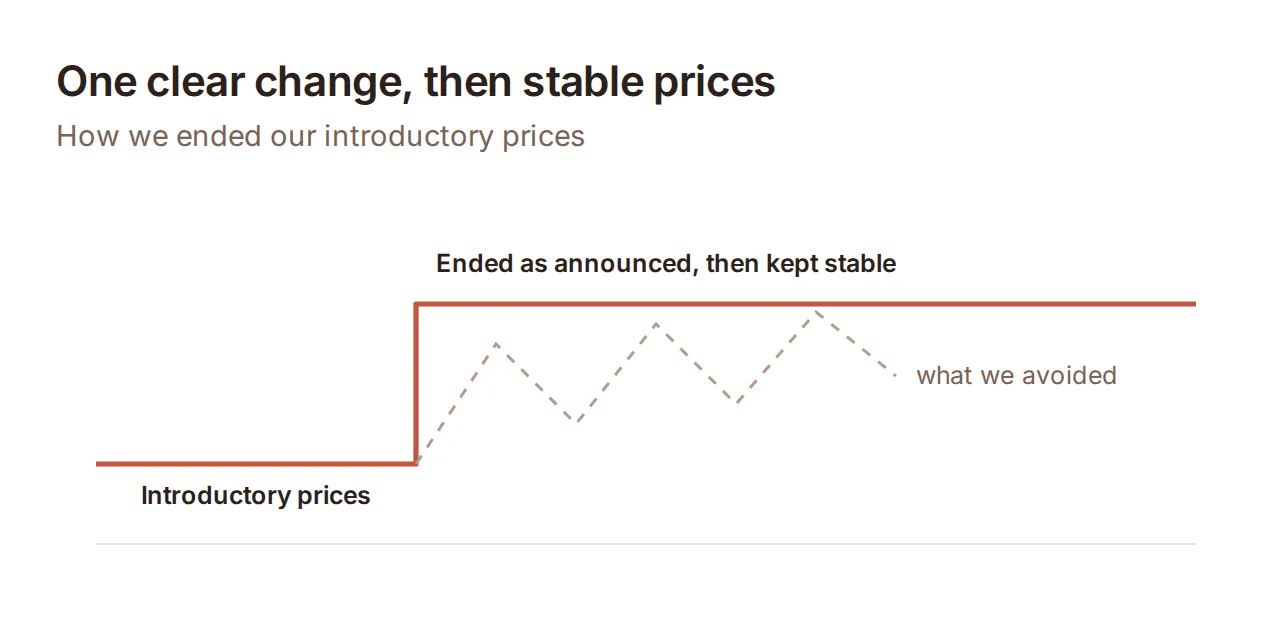
Pricing is a promise. In the first week our prices were so low that we were losing money on every order. Raising them right away would have looked like we were changing prices again and again. So we called them introductory prices, ended them as announced, and then kept our real prices stable. That way customers saw one clear change, not prices moving up and down.
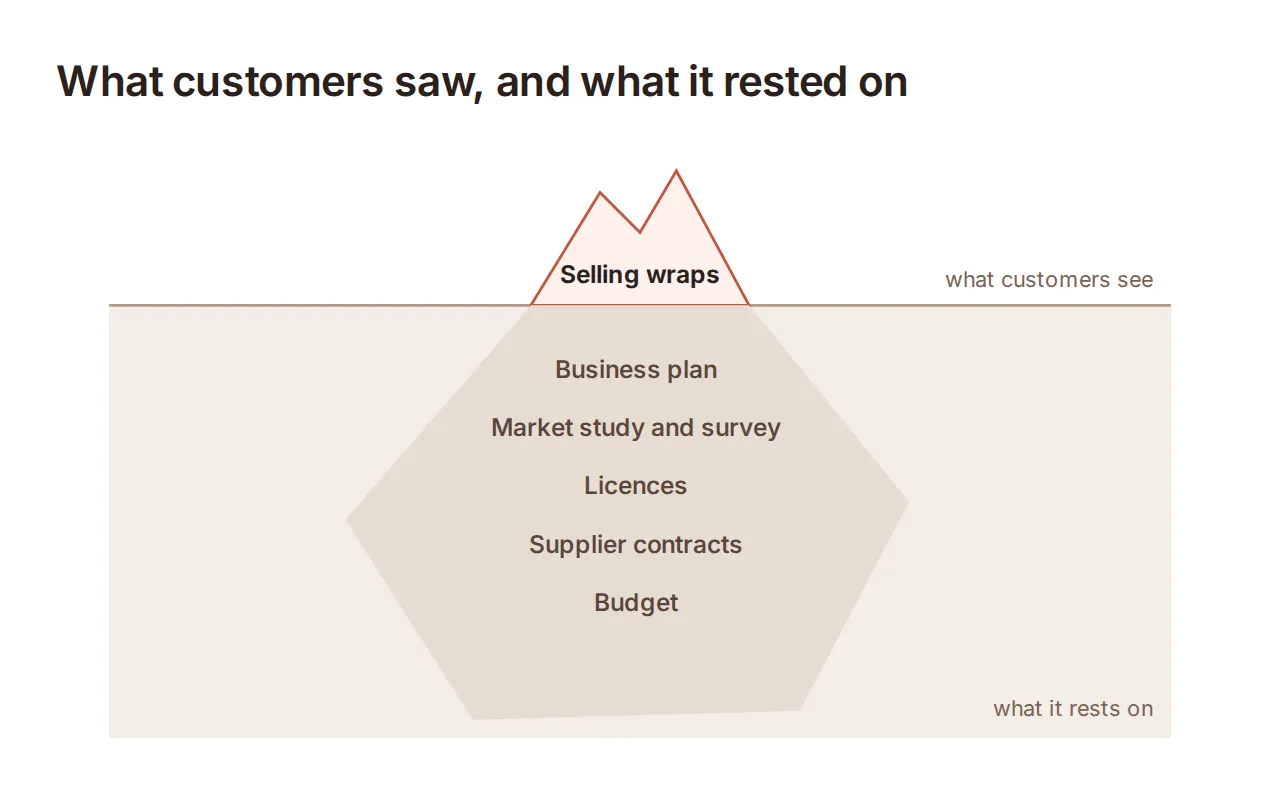
The invisible work comes first. Before we sold a single wrap, there were licences to get and supplier contracts to sign. Nobody sees this part, but everything visible depends on it.
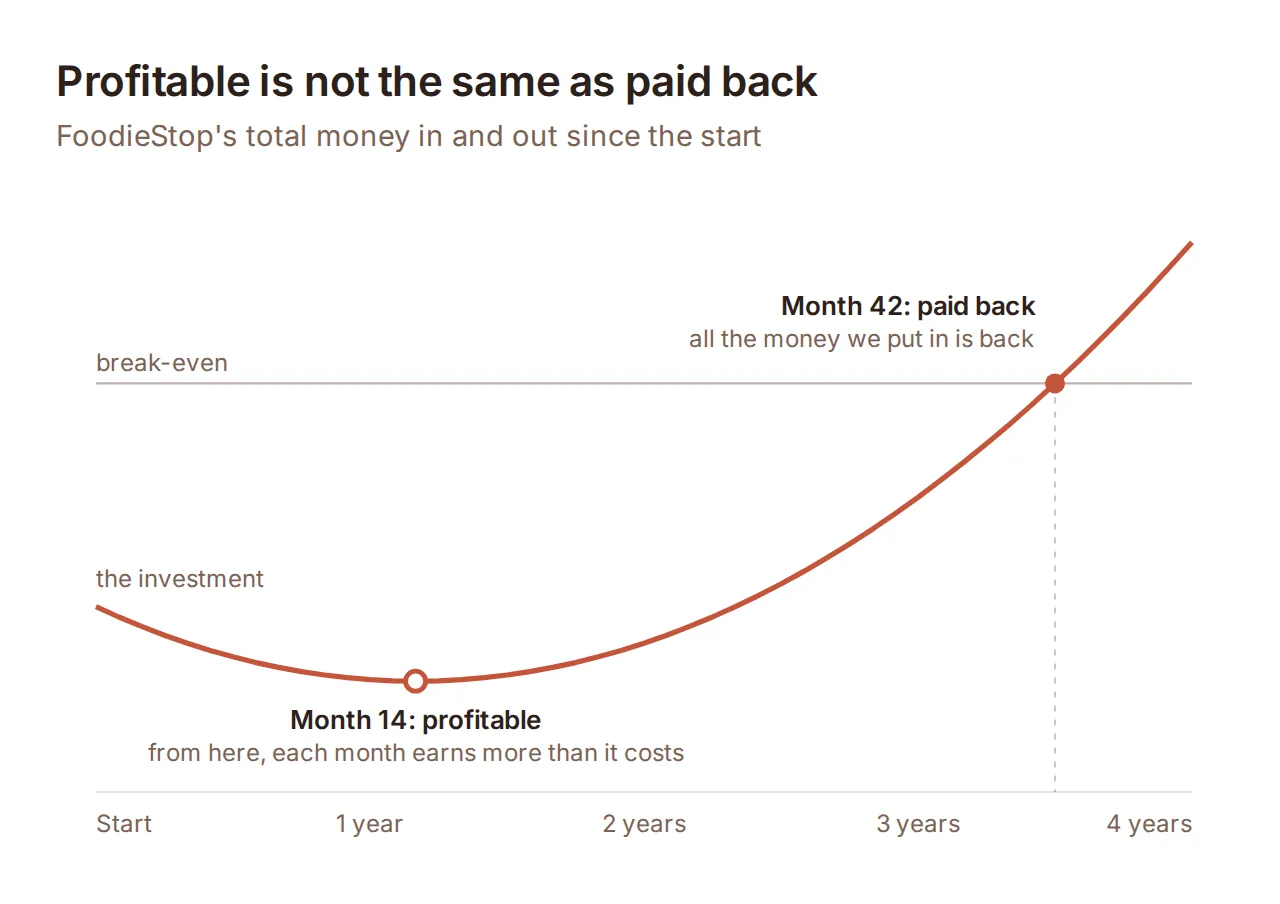
Profit is not payback. We were profitable within 14 months, which felt like success. But it took three and a half years to earn back everything we had invested. That gap taught me to look at a whole investment, not just this month’s numbers.
Grow from something that works. We did not start with four trucks. Once the first truck had shown it could earn back its investment, we put its earnings into the next one, and then the next. Every new truck was built on something that already worked.
Clear roles keep a partnership healthy. My brother ran the daily operations; I handled the setup, the suppliers and the budget with him. Agreeing early on who owns what meant each of us could decide quickly in our own area.
Knowing when to let go. By 2023 I was doing my master’s in Germany, and my brother was busy with his own company and family. Running four trucks from a distance was becoming too much for both of us, and FoodieStop deserved more time than we could give. Selling it to new owners was the right decision. We still follow how it is doing, and I am glad it now gives other people a living.
Today, when I plan a budget, negotiate with a supplier or weigh a risk at work, I think back to FoodieStop. It was the first time those decisions were real, with our own money behind them.
Kontakt
Fragen, Ideen oder selbst etwas Ähnliches ausprobiert? Ich freue mich, davon zu hören. E-Mail schreiben