AI just won a Nobel Prize. Two, actually.
· 5 Min. Lesezeit
Imagine getting a phone call at night, in a cheap hotel in California with a bad phone line, telling you that you have won the Nobel Prize in Physics. That is what happened to Geoffrey Hinton on Tuesday. He told the Nobel Prize website he had no idea he had even been nominated, and that he had planned to have an MRI scan that day. He was, in his own words, “extremely surprised”.
The next day, the Nobel Prize in Chemistry also went to AI. Two of the oldest and most serious prizes in science, in one week, both for work on artificial intelligence. That has never happened before.
The physics prize: teaching computers to learn
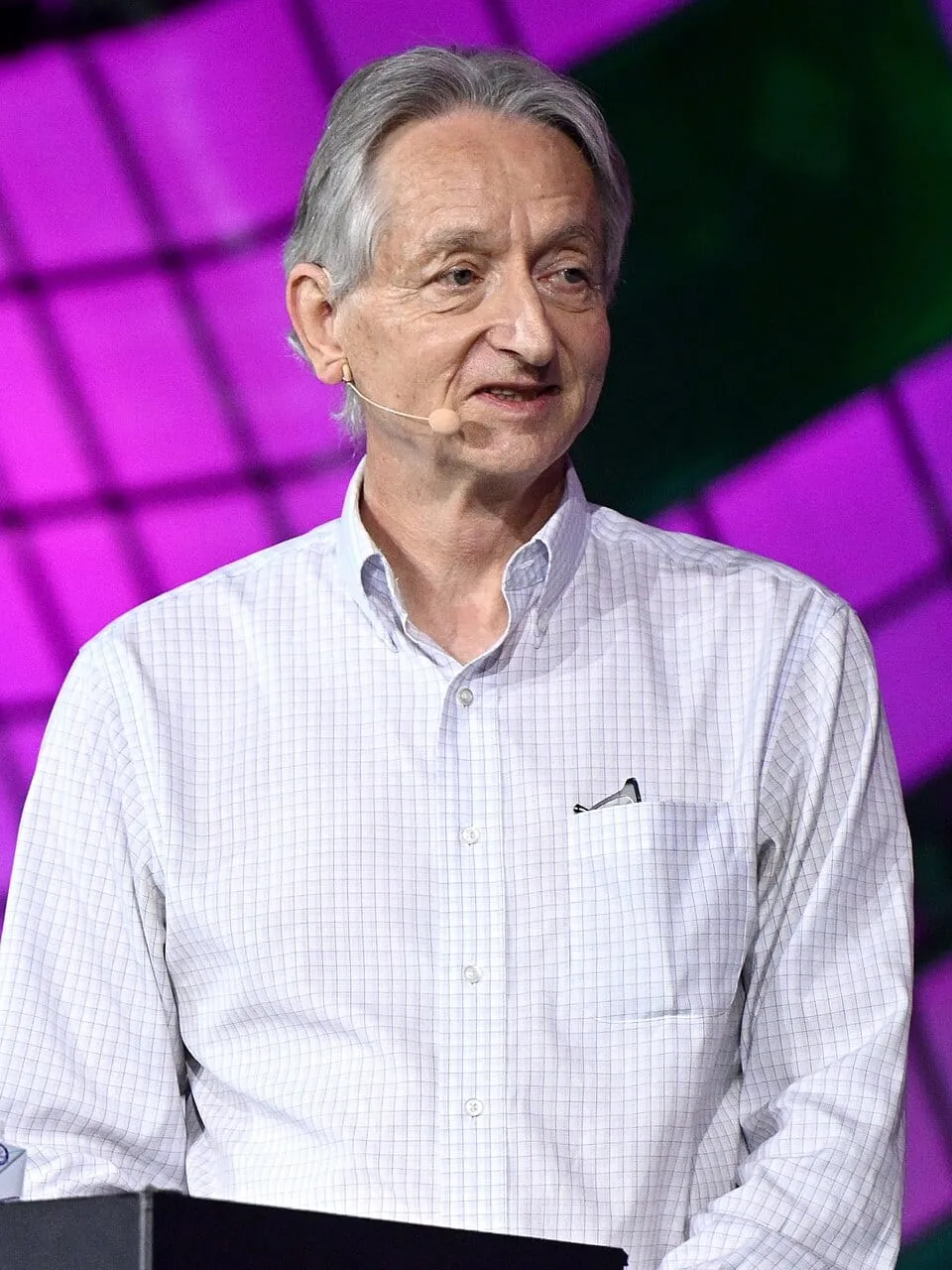
The physics prize went to John Hopfield, from Princeton, and Geoffrey Hinton, from the University of Toronto, “for foundational discoveries and inventions that enable machine learning with artificial neural networks”.
Neural networks are the basis of almost every AI tool you use today, from ChatGPT to the face unlock on your phone. They are loosely inspired by the brain: many simple units, connected to each other, that together can learn patterns.
In 1982, Hopfield described a network that works like memory. Show it a pattern, and it stores it. Later, show it a damaged or incomplete version, and it finds its way back to the original. It is a bit like hearing the first three notes of a song and suddenly remembering the whole chorus. Hopfield used ideas from physics, about how tiny magnetic particles settle into stable states, to explain how it works.
Hinton built on that with the Boltzmann machine, a network that could learn the typical features of data by itself, again using tools from physics. Over the following decades, he kept pushing neural networks when most of computer science had given up on them. In 2012, a network built by him and his students beat everything else at recognising objects in photos, by a wide margin. That moment is often seen as the start of the AI boom we live in now.
Which is why he is often called “the godfather of AI”.
Is this even physics?
Not everyone was thrilled. Some physicists grumbled that this was a computer science prize dressed up in a lab coat. There is no Nobel Prize for computer science, so the committee had to put it somewhere.
I think the committee has a point, though. The early ideas really did come from physics, and physics in return now uses these methods everywhere, from finding new particles to designing materials. Still, it is a bit like giving the Nobel Prize in Literature to the inventor of the printing press. Important, absolutely. But you can see why some people raised an eyebrow.
My honest guess? The committee also wanted to be part of the biggest science story of our time. Nobody wants to be the prize that missed the AI revolution.
The chemistry prize: the protein puzzle
The chemistry prize was split. Half went to David Baker, from the University of Washington, “for computational protein design”. The other half went to Demis Hassabis and John Jumper, from Google DeepMind, “for protein structure prediction”.
Proteins are the tiny machines of life. They carry oxygen in your blood, fight infections and digest your lunch. Each protein is a long chain of building blocks that folds itself into a very specific 3D shape, and that shape decides what it does.
The problem: working out that shape from the chain was incredibly hard. With lab methods, it could take years for a single protein. Scientists had been trying to predict it with computers for about 50 years, with limited success.
In 2020, DeepMind’s AlphaFold2 more or less solved it. Give it the chain, and in most cases it predicts the shape with an accuracy close to lab experiments. Since then, it has been used to predict the structure of virtually all of the roughly 200 million proteins scientists know about. More than two million people in 190 countries have used it.
Hassabis himself has a fun background, by the way. He was a chess prodigy as a child, and helped design the video game Theme Park as a teenager, before founding DeepMind.
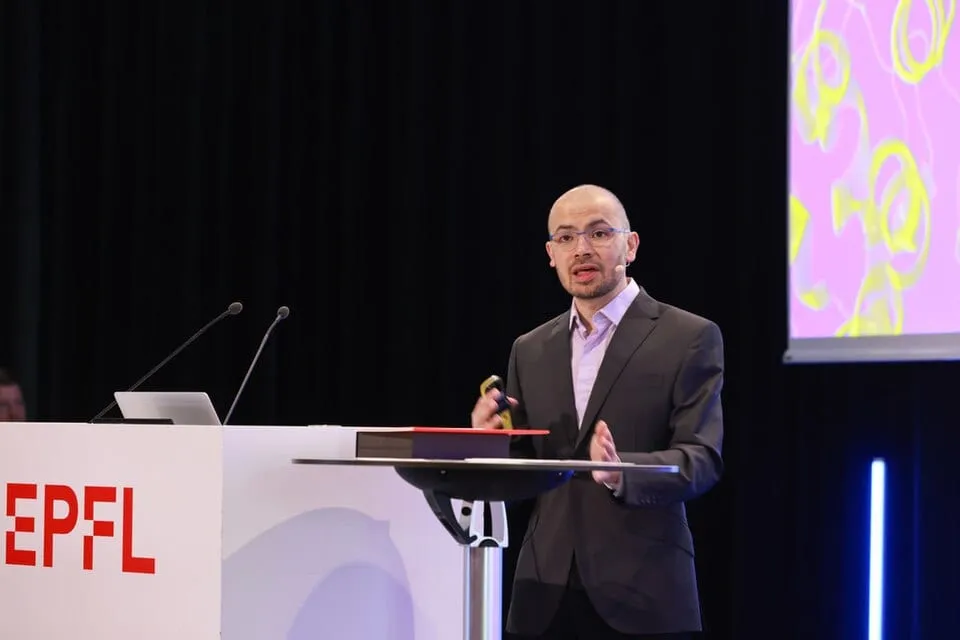
Baker went the other way round. Instead of predicting the shapes of existing proteins, he designs completely new ones that nature never made. In 2003, his team built a protein unlike any known one. Since then, his lab has designed proteins that could become new medicines, vaccines and sensors.
The winner who is worried
Here is the part that makes this year’s prizes really unusual. Last year, Hinton left his job at Google so he could speak freely about the risks of AI. He worries that AI could one day become smarter than us and get out of our control.
He did not change his mind because of a Nobel Prize. On the phone to the press conference, he said: “We have no experience of what it’s like to have things smarter than us.” He also said we need to worry about “the threat of these things getting out of control”.
It is a rare thing: a scientist receiving the highest honour for his life’s work, and using the moment to warn the world about it.
What I think
I find these two prizes together a nice reminder of what AI is actually good for. Most of the AI news we see is chatbots, funny images and companies fighting over who has the biggest model. AlphaFold is something different: a tool that quietly helps scientists everywhere understand diseases and design medicines faster. That is the kind of AI I want more of.
I also like that the prizes went back to the beginning. Hopfield’s work is from 1982. Hinton spent decades on neural networks when most people thought they were a dead end. Today’s AI boom feels sudden, but it stands on forty years of slow, unfashionable work by people who kept going anyway.
And I like that the “godfather of AI” is not just celebrating. If the person who helped build this technology thinks we should be careful, it is worth listening. Even if he did hear the news in a cheap hotel.
Quellen
- The Nobel Prize: Press release, Nobel Prize in Physics 2024 ↗nobelprize.org
- The Nobel Prize: Press release, Nobel Prize in Chemistry 2024 ↗nobelprize.org
- Popular Science: Geoffrey Hinton wins the Nobel Prize in Physics (October 2024) ↗popsci.com
- Computing: AI pioneers win the 2024 Nobel Prizes in physics and chemistry (October 2024) ↗computing.co.uk