A $44 billion sink: Elon Musk buys Twitter
· 4 Min. Lesezeit
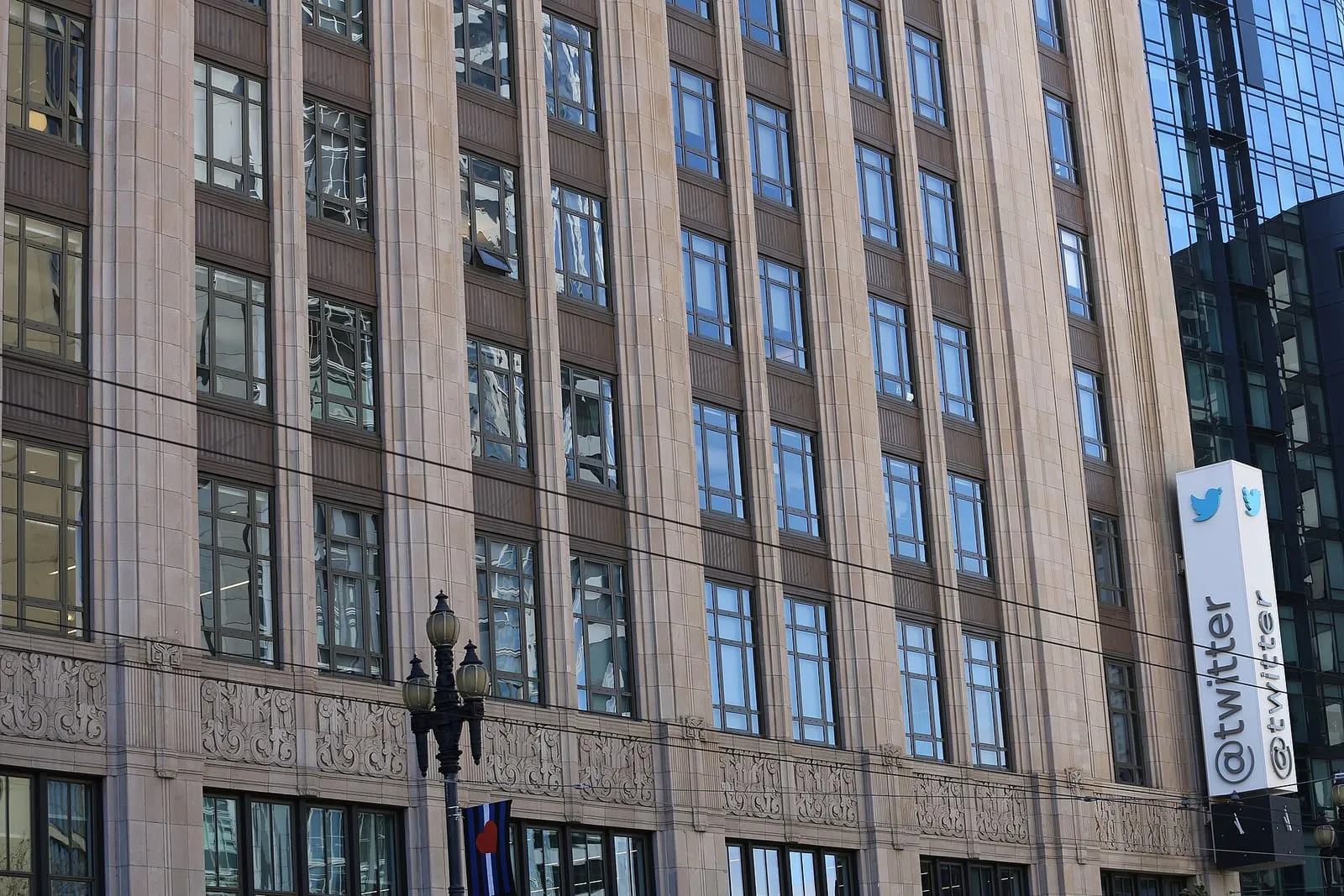
On 26 October, Elon Musk walked into Twitter’s headquarters in San Francisco carrying a kitchen sink. He posted the video with the words “let that sink in!”
The next day, he owned the company. Three weeks later, about half of the people who worked there had been let go, a fake drug company account had promised free insulin, and the remaining staff had been asked to choose between “extremely hardcore” work and leaving.
It has been a busy month.
How we got here
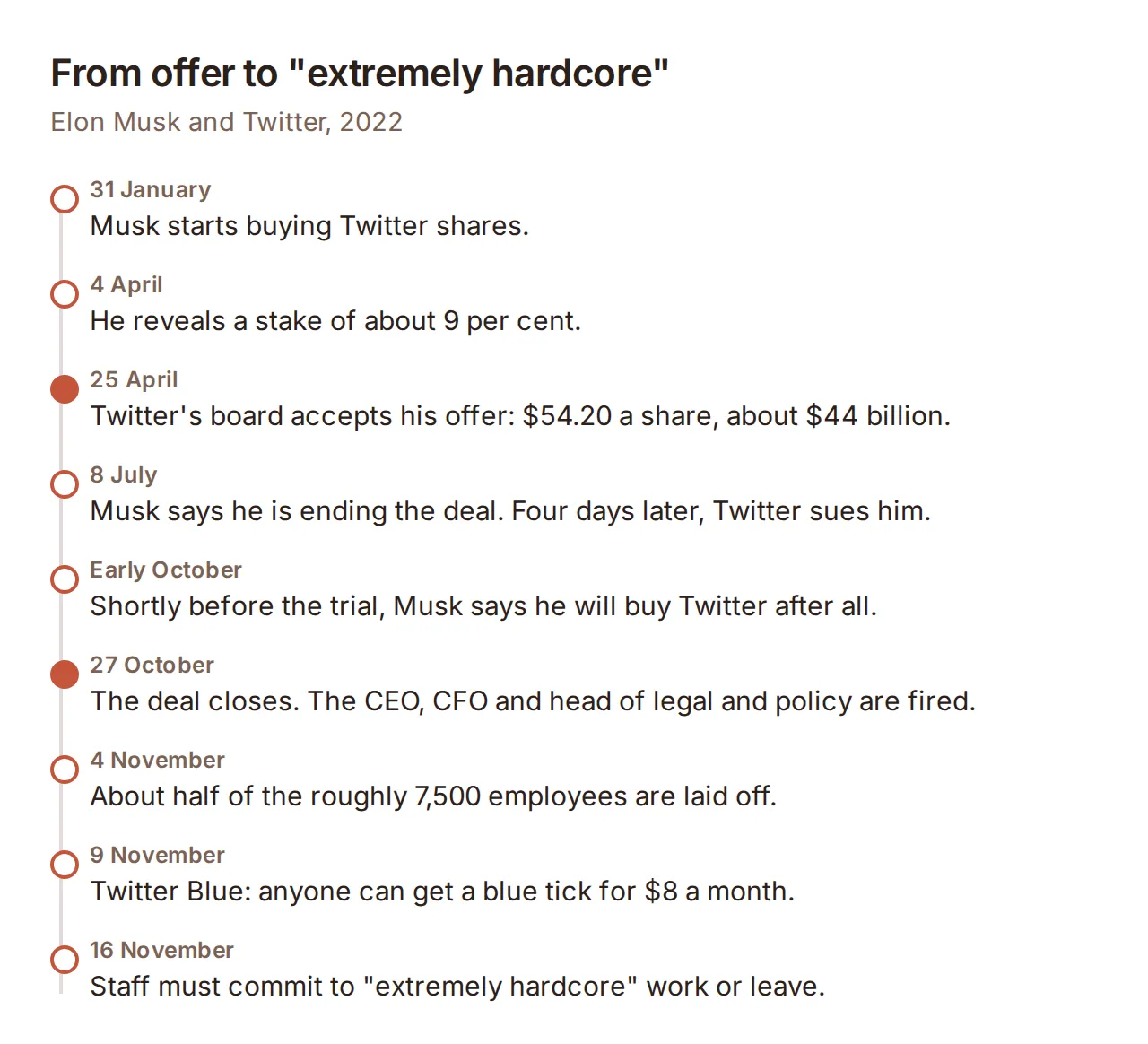
This story started back in January, when Musk quietly began buying Twitter shares. In April, he revealed he owned about 9% of the company, which made him its biggest shareholder. Twitter offered him a seat on its board. He said no, and a few days later offered to buy the whole company instead, for $54.20 a share, about $44 billion in total.
On 25 April, Twitter’s board accepted.
Then Musk changed his mind. In May, he put the deal “on hold”, saying Twitter had more fake and spam accounts than it claimed. In July, he said he was ending the deal completely. Twitter sued him to make him go through with it, and a trial was set for 17 October.
In early October, shortly before the trial, Musk said he would buy Twitter after all, at the original price. On 27 October the deal closed, and Musk tweeted: “the bird is freed”.
Buying a company you spent months trying not to buy, at a price you clearly thought was too high, is not how most people do shopping. But here we are.
The first three weeks
Things moved fast.
- Day one: Musk fired the CEO, the chief financial officer and the head of legal and policy. He changed his profile to “Chief Twit”.
- 4 November: Twitter laid off about half of its roughly 7,500 employees. Many found out when their access to work systems suddenly stopped.
- 9 November: A new Twitter Blue launched. For $8 a month, anyone could get the blue tick next to their name. Before, the tick meant Twitter had confirmed you are who you say you are. Now it meant you had paid $8.
- The next day: Predictably, people bought ticks and pretended to be famous people and companies. The most famous fake, an account pretending to be the drug company Eli Lilly, posted that insulin was now free. The real Eli Lilly had to apologise for a tweet it did not write. Twitter paused new Blue sign-ups soon after.
- 16 November: Musk emailed the remaining staff. Twitter would need to be “extremely hardcore”, with long hours. Anyone who did not click “yes” by the next day would be treated as having resigned. Hundreds did not click.
Meanwhile, several big companies paused their advertising on Twitter while they waited to see what would happen. For a company that makes most of its money from ads, that is a problem.
Why it matters, even if you do not use Twitter
Twitter is not the biggest social network. Far more people use Facebook, Instagram or TikTok. But Twitter punches far above its weight, because the people who use it a lot are journalists, politicians, scientists and companies. A lot of news starts there.
That is also why the blue tick mattered. It was never perfect, but it was a quick way to check that a breaking news tweet from a government, a company or a newspaper was real. When anyone can buy the tick, it stops answering that question. The insulin tweet showed how fast that can go wrong.
What I think
I find it hard to judge Musk’s plans for Twitter yet. Some of his complaints about the old Twitter, like slow product decisions and too many fake accounts, were shared by plenty of people. Cutting costs at a company that had been losing money is not crazy in itself.
But as someone who works in project management, the way it is being done makes me nervous. Major changes are being launched in days, announced in tweets, and sometimes reversed a few days later. Half the team is gone, including people who understood how the systems actually work. And a big feature like paid verification went live without much thought about the most obvious way people would misuse it.
In any project, there is a difference between moving fast and skipping the risk assessment. The first can be a strength. The second usually costs more time later than it saved at the start.
And I will say this for Musk: the old Twitter was not a model of good management either. It had been losing money for most of its life, and it changed very slowly. Someone was going to shake it up eventually. My problem is not that he is shaking it. It is that he seems to be doing it without a plan anyone else can see.
Twitter might come out of this as something better. It might not. Either way, it will be a fascinating case study. I just hope the servers keep running while we find out.