RAMageddon: AI ate my RAM
· 8 Min. Lesezeit
On 28 July, Apple became the second company in history to be worth $5 trillion, after Nvidia. Two days later, on its earnings call, Tim Cook had to explain why almost every Mac and iPad now costs more than it did in May. His answer was a sentence I have not heard from Apple before: “We’re in what I would characterize as a 100-year flood on the memory pricing, with exponential increases in memory prices.”
Think about who is saying this. Tim Cook joined Apple in 1998 to fix its supply chain, and turned it into the one every other company studies. Apple buys in huge volumes, signs long contracts and plans years ahead. If anyone could shield its customers from a shortage, it was Apple. It could not.
The tech press has a name for what is happening: RAMageddon. Here is what is behind it, as far as I can piece it together.
What RAM is, and why there is so little of it
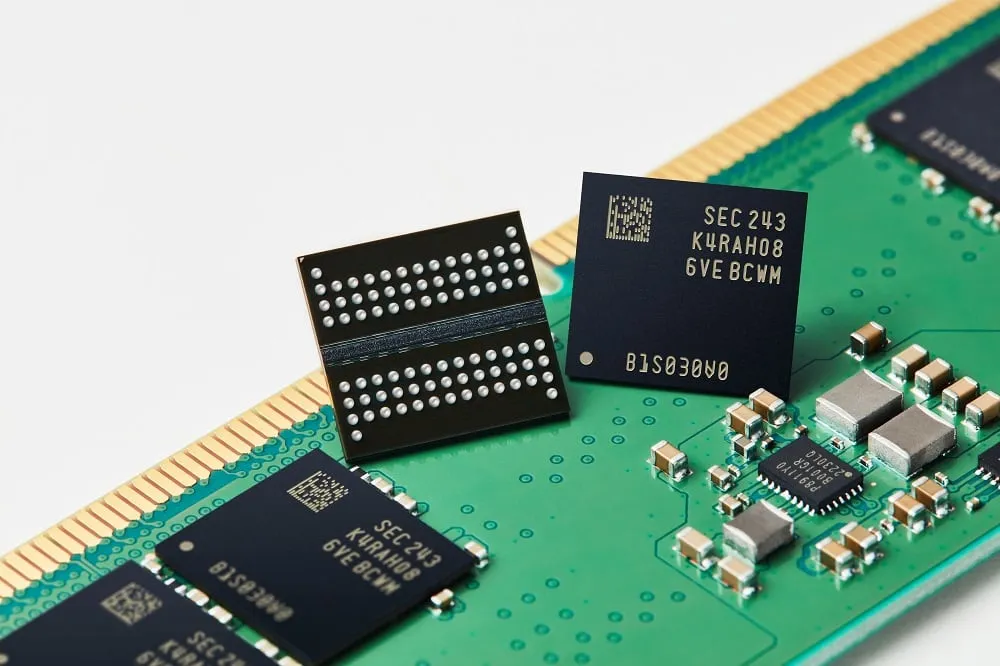
RAM, or DRAM, is a computer’s working memory. Everything you have open right now, every app, every browser tab, lives in it. Every phone, laptop, games console, car and server needs it.
The surprising part is how few companies make it. Three makers share almost the whole market. In the first three months of 2026, according to the market research firm TrendForce, Samsung had 38.5% of DRAM revenue, SK hynix 28.8% and Micron 22.4%. Together that is nearly 90%. When those three decide where their chips go, the whole world follows.
How AI ate the memory
AI chips like Nvidia’s need a special kind of memory called HBM, high bandwidth memory. It is DRAM, but stacked in towers of chips and placed right next to the processor, so data can move very fast. Each AI accelerator carries a lot of it, and AI companies are buying accelerators by the hundreds of thousands.
Here is the catch. HBM needs much more factory capacity than normal memory. Back in 2024, Micron said that HBM3E uses about three times as much wafer as DDR5 for the same amount of memory. Wafers are the silicon discs the chips are cut from, and the factories can only make so many.
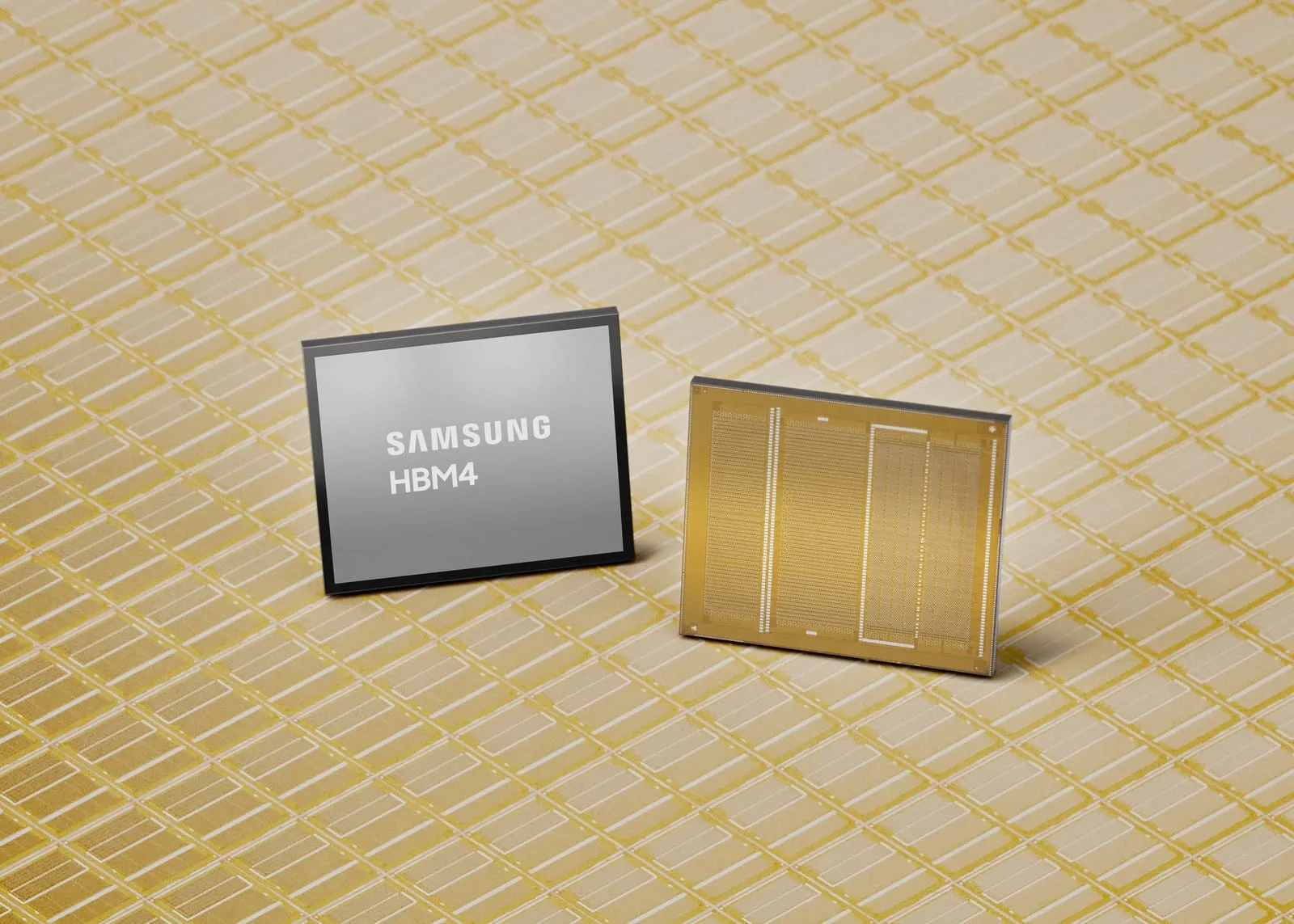
So every factory line moved to HBM leaves less for the memory in your laptop. And the makers had every reason to move: AI customers pay more and buy more. Samsung said in February that it expects its HBM sales to more than triple this year.
Three more things made it worse:
- AI servers need normal memory too. Not only HBM: the servers around the AI chips are packed with ordinary DRAM and SSDs, especially now that AI models are used by millions of people every day.
- The big buyers lock in supply first. The large cloud companies sign long-term agreements with the memory makers. What is left over goes to everyone else, at whatever price the market sets.
- Nobody built for this. In 2023, memory was so cheap that the makers lost billions and cut production. New factories take years to build. You cannot switch on more supply in a quarter.
In December 2025 came a symbolic moment: Micron announced that it would leave the consumer business and stop selling its Crucial RAM and SSDs, the ones people buy to build or upgrade their own PCs. One of the three big makers simply decided that ordinary customers were no longer worth the chips.
The numbers
Companies like Apple, Dell or Sony do not buy memory in shops. They buy it on contracts, with prices agreed every quarter. Those contract prices are the ones that matter, and this is what happened to them:
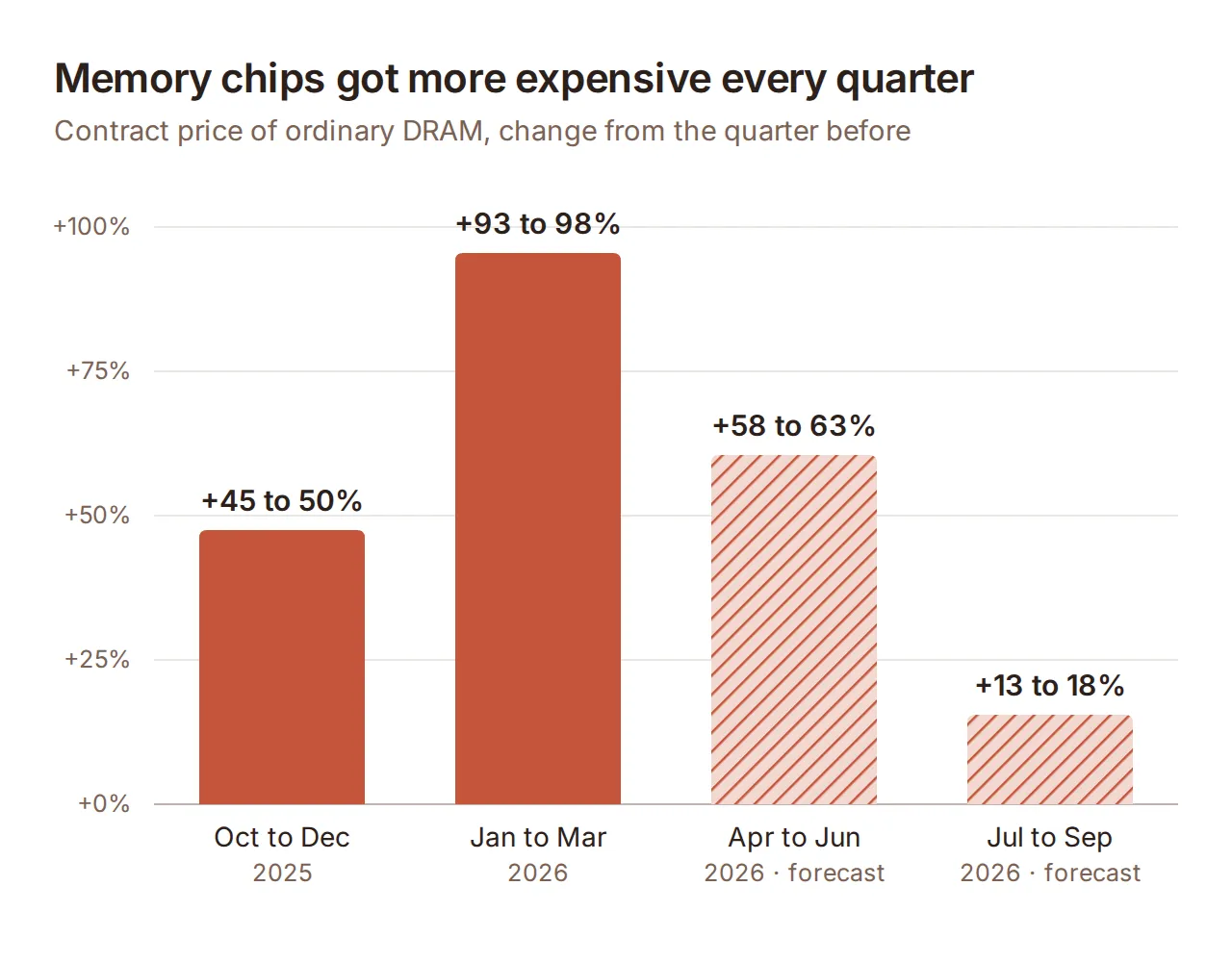
From October to December 2025, ordinary DRAM got 45 to 50% more expensive. From January to March 2026, it nearly doubled, up 93 to 98% in a single quarter. TrendForce had expected PC memory alone to rise by more than 100% in that quarter, the biggest jump it had ever recorded. For April to June it forecast another 58 to 63%, and for July to September, 13 to 18%.
The increases are getting smaller, but they are still increases on top of increases. If the forecasts hold, the same memory chip will cost around five times what it did in September 2025.
You can see it in the makers’ revenue too. The whole DRAM industry made $53.6 billion from October to December 2025. One quarter later it was $97 billion, 81% more, mostly because of price, not because they sold more chips.
Even Apple
For a long time, Apple seemed protected. It buys more than almost anyone, plans far ahead and had stock in its warehouses. For the first months of the crisis, its prices did not move.
On 17 June, Tim Cook told The Wall Street Journal: “Unfortunately, price increases are unavoidable. We’re doing our best to mitigate the huge increases that are being passed to us, and we’ve been trying to shield our customers from the increases, but the situation has become unsustainable.”
Eight days later, on 25 June, Apple raised its prices. Its statement was unusually direct: “We have never seen a component price increase this much, this quickly. We have shielded our customers from these increases so far, but we have now reached a point where we need to begin raising prices on a number of products.”
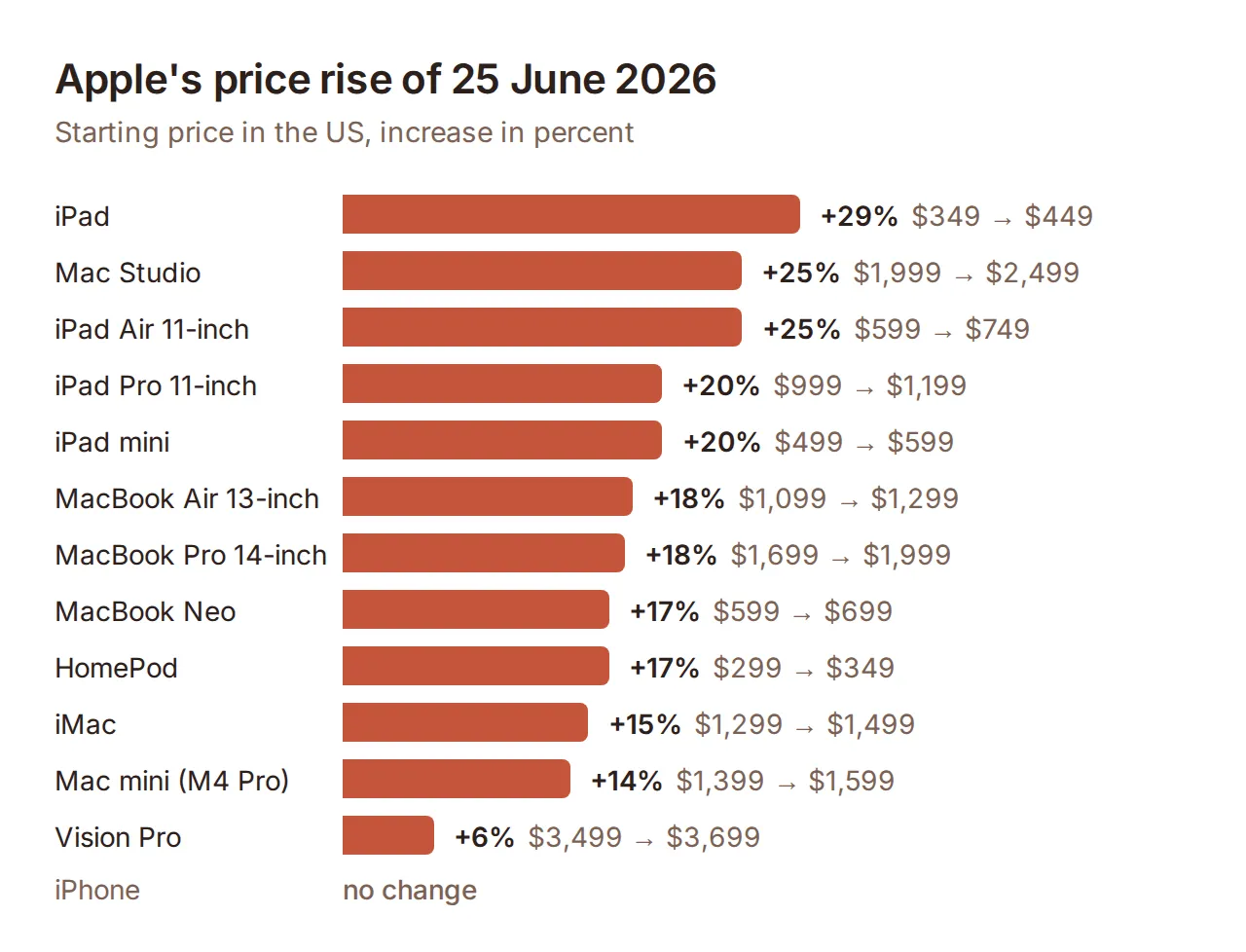
Almost everything except the iPhone, Apple Watch and AirPods got more expensive. The base iPad went up by $100, almost 30%. The MacBook Air now starts at $1,299 instead of $1,099. And the MacBook Neo, the $599 Mac I wrote about in April, now costs $699. A month earlier, in May, Apple had already quietly dropped the cheapest Mac mini, the $599 model with 256 GB of storage, so the Mac mini now starts at $799.
The earnings call on 30 July showed how deep this goes. Cook described it step by step: Apple “paid more for memory in the March quarter than the December quarter”, expected “to pay significantly more in the June quarter than the March quarter, and that is what happened”, and “for September, we expect to pay even higher memory costs.”
The most telling number came from Apple’s CFO, Kevan Parekh. Leaving out a one-off benefit from tariff refunds, Apple’s gross margin fell from 49.3% in the March quarter to 48.1% in the June quarter. Asked why, he said that “more than 100%” of that drop “can be explained by the memory cost change”. In other words: without memory, Apple’s margin would have gone up. For the September quarter, Apple expects 47 to 48%.
So Apple did both. It raised prices, and it still absorbed part of the cost itself. Cook said Apple looks at “units, revenue, and margin” and then makes “a business judgment”. That is the honest version of what every company is doing right now: deciding how much of the pain to pass on, and how much to eat.
The iPhone is the interesting gap. It is Apple’s biggest product, and so far its price has not changed. The iPhone 18 Pro is expected in September, and Cook would not say whether it will cost more. We will know in a few weeks.
Not just Apple
Apple is the most visible example, but it is far from the only one.
The Raspberry Pi is maybe the clearest case. The small, cheap computer is beloved by students and hobbyists, and it is mostly a board with a chip and some memory on it. The 16 GB Raspberry Pi 5 launched in January 2025 for $120. After three price increases in four months, it now costs $305. When Raspberry Pi announced the latest one, it wrote a line I keep thinking about: “The era of over-specifying memory is most definitely behind us.”
Phone makers are in the same position. Xiaomi warned back in November that its 2026 phones would cost more. And in March, TrendForce estimated that memory alone could push the price of a normal $900 laptop up by more than 30%.
Cheap devices suffer most. A $3,000 laptop can hide a $100 increase in memory cost. A $300 phone or a $45 Raspberry Pi cannot.
Who is winning
The memory makers, of course.
On 7 July, Samsung said it expects an operating profit of about 89 trillion won for April to June, roughly $58 billion. That is about 19 times what it made in the same quarter a year earlier, and by most counts the largest quarterly profit any tech company has ever reported.
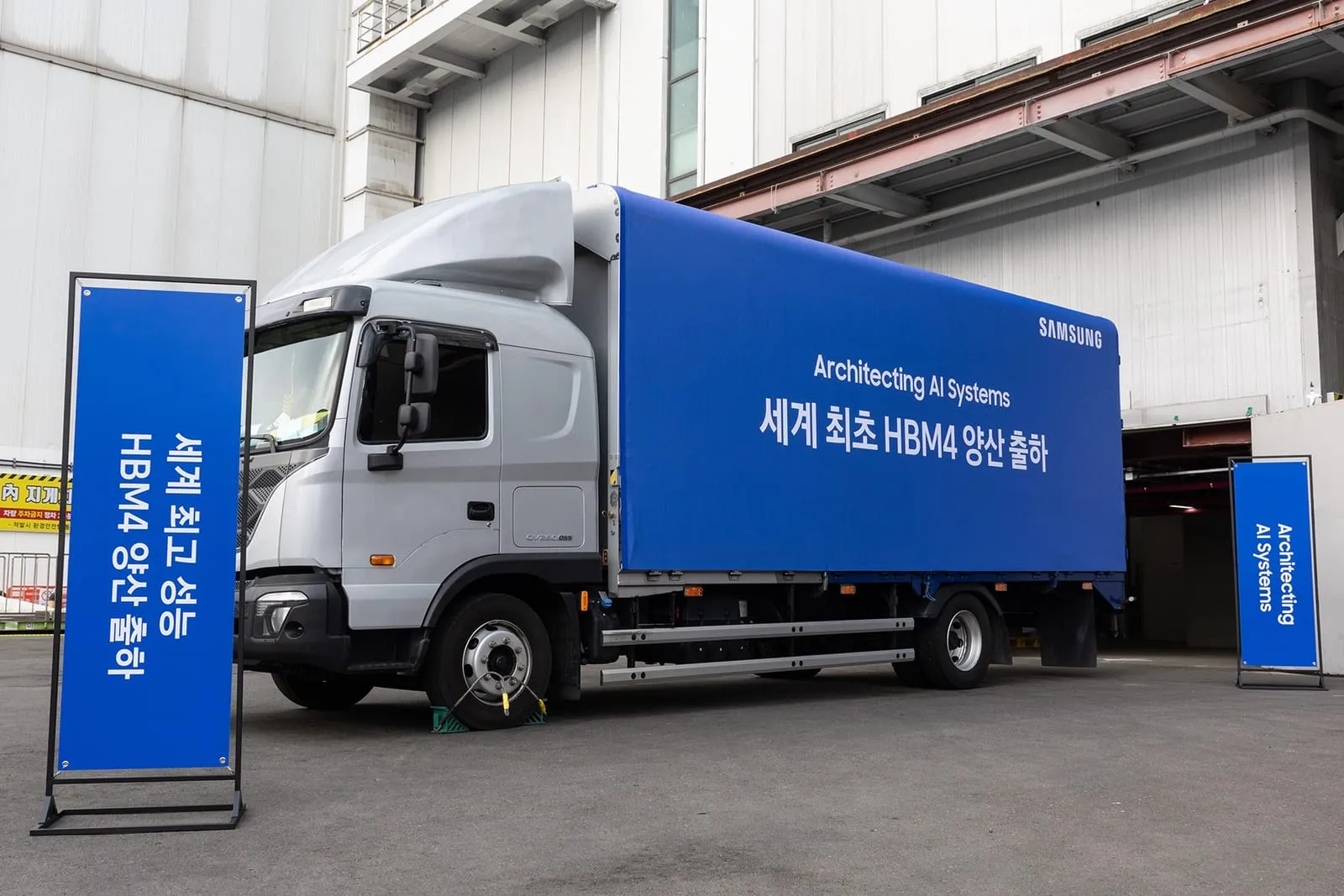
There is an irony inside that number. Samsung also makes phones and TVs, and those divisions have to buy memory at the same high prices as everyone else. Samsung the chip maker is winning, while Samsung the phone maker is paying.
When does it end?
Not soon, I think, but there are first signs of change.
TrendForce expects price rises to slow down from July to September, partly because people are buying fewer phones and laptops at these prices, and partly because big server buyers are on long-term contracts that cap the increases. Slower increases are not falling prices, though. A chip that costs five times as much and then “only” 15% more is still very expensive.
Real relief needs new factories, and those take years. Until then, memory makers have little reason to change course, as long as AI companies keep buying.
The one thing that could change it quickly is the AI boom itself. Memory has always moved in cycles: shortage, high prices, too many factories, crash. It happened in 2023. If AI spending ever slows, the same factories that are now full could suddenly have too much. Nobody knows when that will be, and I would not plan around it.
What I take from it
As a project manager, what strikes me most is not the price. It is how fragile the setup was. Nearly every electronic product in the world depends on one component, made by essentially three companies, in factories that take years to build. Everyone knew that. It simply never mattered, until one new customer, AI, showed up and could pay more than everyone else.
Even the best supply chain in the world could only delay the effect by a few months. Planning helps, contracts help, size helps. None of them help when the whole market moves at once.
If you need a new laptop or phone, my advice is simple: don’t wait for prices to fall this year. Buy what you need now, and think carefully about how much memory you really need, because for most devices you cannot add more later. Raspberry Pi said it best: the era of over-specifying memory is behind us. For now, at least.
Quellen
- TrendForce: 1Q26 DRAM industry revenue up 81% (June 2026) ↗trendforce.com
- TrendForce: Memory contract prices rise in 2Q26 (March 2026) ↗trendforce.com
- 9to5Mac: Apple confirms price increases due to RAM shortage (June 2026) ↗9to5mac.com
- MacRumors: Tim Cook on Apple price increases (July 2026) ↗macrumors.com
- StorageReview: Micron exits the Crucial consumer business (December 2025) ↗storagereview.com