The day one small file broke a big part of the internet
· 4 Min. Lesezeit
On Tuesday, 18 November 2025, just before lunchtime in Europe, large parts of the internet simply stopped. X would not load. ChatGPT showed an error. Spotify, Canva and countless online shops followed. Different companies, different countries, all failing at the same moment.
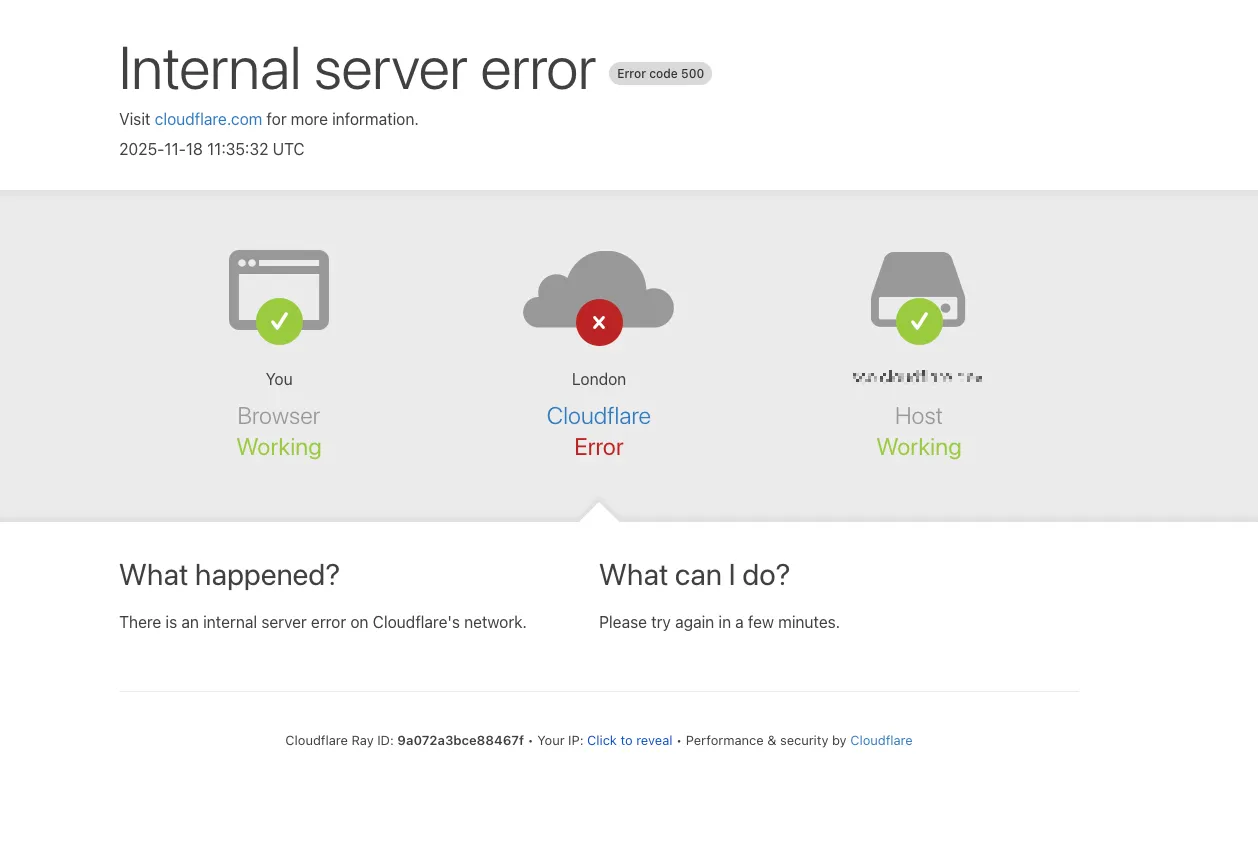
The page people saw was the same everywhere: a grey screen saying “Internal server error”, with a small picture showing your browser working, the website working, and a red cross in the middle, over a cloud labelled Cloudflare.
First, what is Cloudflare?
Most people have never visited cloudflare.com, yet they use it every day. Cloudflare sits between you and a large share of the world’s websites, by most estimates around a fifth of all web traffic.
Think of it as the security desk and post room of a huge office building. Every visitor passes the desk first. The desk checks that you are not a burglar, turns away crowds of fake visitors, and hands out copies of popular documents so the people upstairs are not disturbed. Websites love this, because it makes them faster and protects them from attacks.
But if the security desk suddenly stops letting anyone through, it does not matter that every office upstairs is open. Nobody gets in.
What actually went wrong
The cause was surprisingly small. Cloudflare has a feature called Bot Management, which decides whether a visitor is a real person or an automated program. It relies on a file listing the signals it looks at, a bit like a checklist. This file is rebuilt every few minutes and sent to Cloudflare’s servers all over the world.
That morning, engineers changed the permissions on one of their databases, a routine improvement to make access rules clearer. But the change had a side effect. The query that builds the checklist suddenly returned every entry twice. The file doubled in size.
The software reading that file had a fixed limit on how many entries it would accept, far more than it normally needed. The doubled file went over that limit. Instead of ignoring the extra entries or falling back to the old file, the software stopped with an error. Every server that received the file began to fail.
It is a bit like a printer that jams completely because someone sent the same page twice, and then every printer in the building jams too, because they all share the same print queue.
Why it looked like an attack
The strangest part is that the internet did not just fall over. It kept flickering. Sites went down, came back, went down again.
The reason: the database change was rolled out step by step. The file was rebuilt every five minutes, and each time it depended on whether the query ran on an updated part of the database or not. Sometimes the file was good, sometimes bad. So the network kept recovering and failing.
To make it more confusing, Cloudflare’s own status page, which runs somewhere else entirely, went down at the same time by pure coincidence. For a while, the engineers suspected a huge attack. It was not. It was their own file.
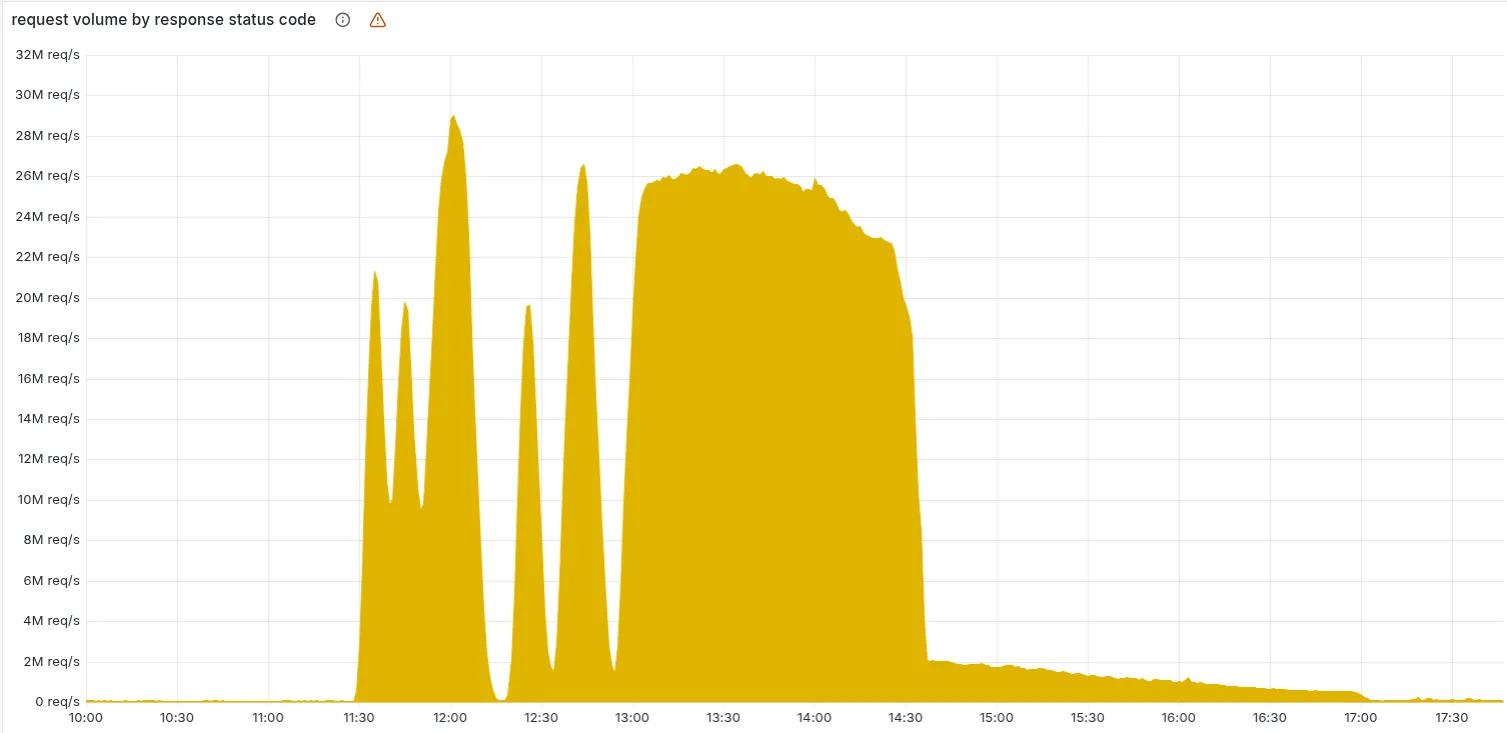
Once they found the cause, they stopped the bad file from spreading, put back an older version that worked, and restarted their systems. Most traffic was flowing again by 14:30 UTC, about three hours after it started, and everything was back to normal by 17:06. Cloudflare called it its worst outage since 2019.
It is not the first time
What makes this outage interesting is how familiar it feels.
- CrowdStrike, July 2024. A security company sent a faulty update file to Windows computers. Millions of them crashed at once, grounding flights and closing bank counters. Again, one file, sent everywhere at the same time.
- Amazon Web Services, October 2025. Just a month before Cloudflare, a problem with internal address lookups in one of Amazon’s biggest data centre regions took down apps from banking to smart doorbells for hours.
- Cloudflare itself, December 2025. Barely two weeks later, a short second outage hit part of Cloudflare’s traffic for about 25 minutes, this time from a configuration change made to protect customers against a newly discovered security flaw.
The pattern is the same each time. Nothing broke because something was attacked. Things broke because a small, routine change reached everything at once.
What I think the real lesson is
The internet was designed to have no single point of failure. In practice, we have quietly rebuilt a few. A handful of companies now carry a huge share of the world’s traffic and data. Most of the time, that makes the web faster and safer than it has ever been. But when one of them stumbles, the whole street goes dark, not just one house.
Cloudflare was open about what happened. It published a detailed explanation the same day, apologised plainly, and promised changes: treating its own internal files with the same suspicion as anything coming from outside, adding emergency switches to turn features off worldwide, and reviewing how every part of the system behaves when something goes wrong.
That first promise is the one I find most useful, far beyond software. Most big failures do not start with an enemy. They start with something trusted: our own data, our own process, a change that has worked a hundred times before. The checks we build for outsiders should apply to ourselves too.
And the next time a website shows an error, it is worth remembering that the website itself might be completely fine. It is often something in between, quietly holding up much more of the internet than we notice.
Quellen
- Cloudflare: Cloudflare outage on November 18, 2025 ↗blog.cloudflare.com
- Cloudflare: Cloudflare outage on December 5, 2025 ↗blog.cloudflare.com
- AWS: Summary of the Amazon DynamoDB service disruption (October 2025) ↗aws.amazon.com