Apple Vision Pro: a computer you wear on your face
· 3 min read
On 2 February 2024, Apple Vision Pro went on sale in the United States, eight months after Apple first showed it at its developer conference on 5 June 2023. It costs $3,499. For that money you could buy a MacBook Pro, an iPhone and still have change left for a holiday.
So what exactly are people paying for?
Not virtual reality, says Apple
Apple avoids the words virtual reality. It calls Vision Pro a “spatial computer”. The difference matters.
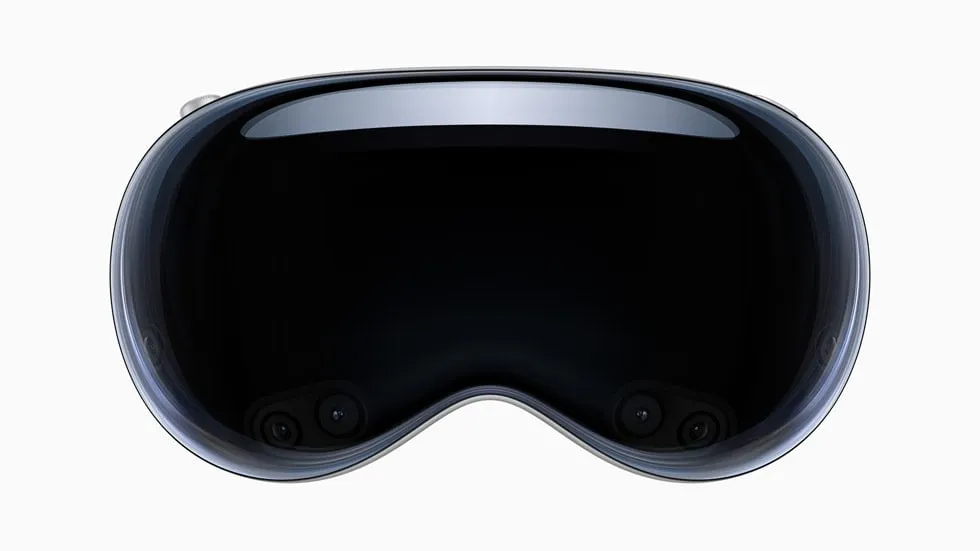
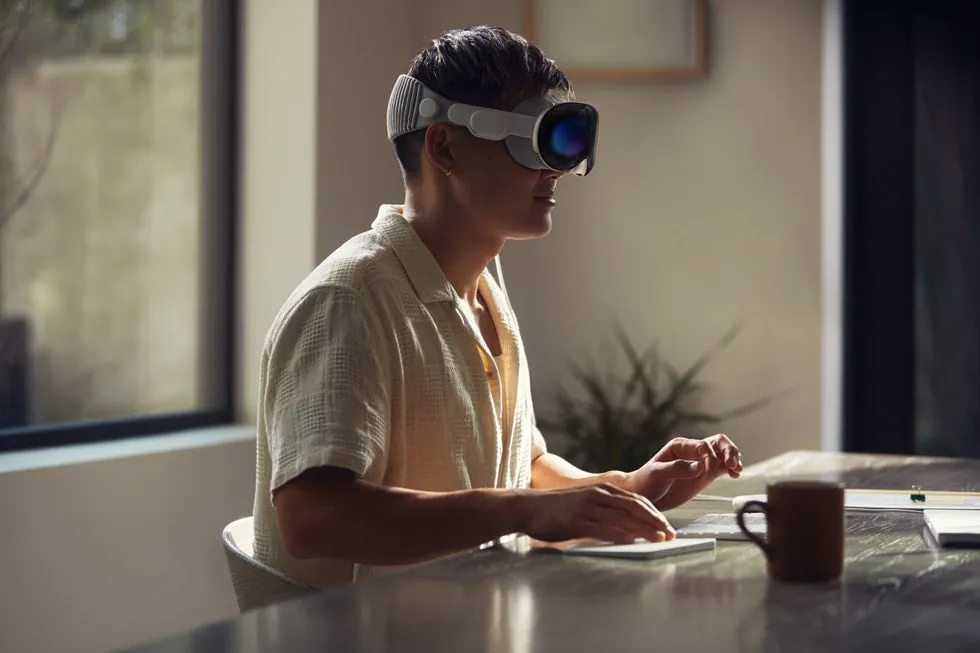
Most VR headsets take you somewhere else: a game world, a virtual meeting room. Vision Pro mostly keeps you where you are. Cameras on the front film the room around you and show it inside the headset in real time, and your apps float in that room like big, glowing screens. You can put a browser window next to your real bookshelf, a movie on your real wall, and a calendar beside your real coffee cup.
Imagine your laptop screen, but without the edges. Wherever you look, there is space to put another window.
How you control it
There are no controllers. You look at a button to select it, and tap your thumb and index finger together to click. Your hands can rest in your lap. You can also use your voice, or connect a keyboard and trackpad.
To make that work, Apple packed in two tiny micro-OLED screens with 23 million pixels in total, more than a 4K TV for each eye, an M2 chip like in a MacBook, and a new chip called R1 that handles all the cameras and sensors so the image keeps up with your head movements.
The clever and the strange
Some ideas are genuinely new:
- EyeSight. When someone walks up to you, an outside screen shows a picture of your eyes, so people do not feel like they are talking to a ski mask.
- Optic ID. It unlocks by scanning your iris, the way Face ID scans your face.
- Spatial photos and videos. You can record 3D memories and later watch them almost as if you are standing there again.
Some things feel very first-generation:
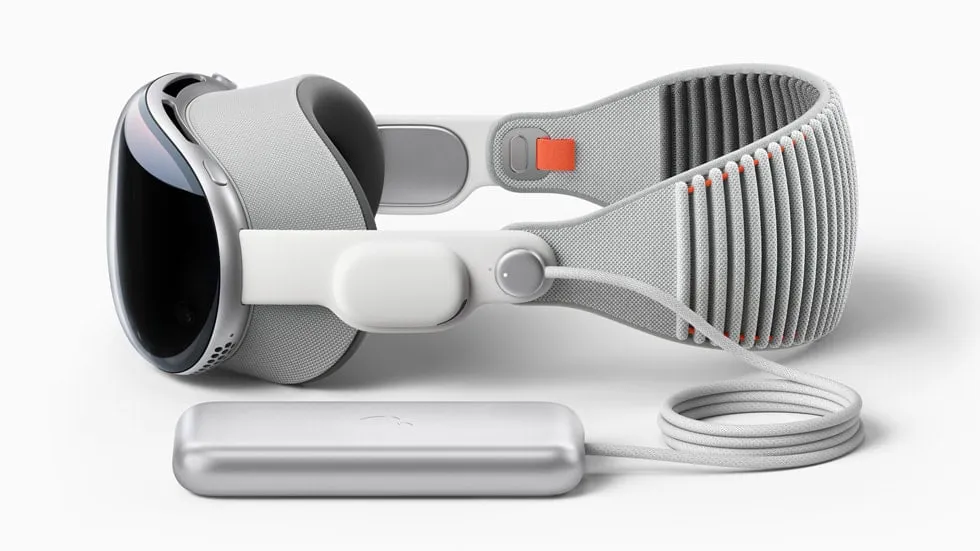
- The battery. It is a separate pack, connected by a cable, that sits in your pocket and lasts about two hours.
- The weight. The headset weighs around 600 to 650 grams, and many early reviewers say their neck and face feel it after an hour.
- Personas. In video calls, others see a computer-generated version of your face. Most people describe it as slightly unsettling.
A useful comparison
Meta sells the Quest 3 for $499. It is lighter, cheaper and has far more games. Vision Pro has much sharper screens, better passthrough of the real world and the polish of Apple’s software. One is a games console for your face. The other is trying to be a computer for your face.
The same thing happened with the first Mac in 1984 and the first iPhone in 2007. Both were expensive, limited, and easy to laugh at. Both pointed at where things were going. Apple is clearly hoping for the same story here.
Who is it for, right now?
Honestly, mostly developers, early adopters and people who love new technology. At this price it is a preview of the future more than a product for everyday life. There are not yet many apps built especially for it, and wearing a computer on your face is still a strange idea for most people.
Taking away the rectangle
What impresses me is not the headset itself but the direction. For forty years, computers have lived inside rectangles: monitors, laptops, phones. Vision Pro is a serious attempt to take the rectangle away.
I would not buy the first version. I would watch the next three very closely. If Apple can make it half the weight and half the price, a lot of people who are laughing today will be wearing one at their desk.