Bosch · Semiconductors
Launching a chip test centre in Penang
PMO for the cross-functional project that opened Bosch's chip test centre in Malaysia.
Auf einen Blick
- Role
- PMO Intern, project lead team
- Period
- Apr 2023 – Sep 2023
- Scale
- International, cross-functional project with teams in Germany and Malaysia
- Tools
- MS Project, Jira, Confluence, SharePoint, Miro, Microsoft Teams
Hintergrund
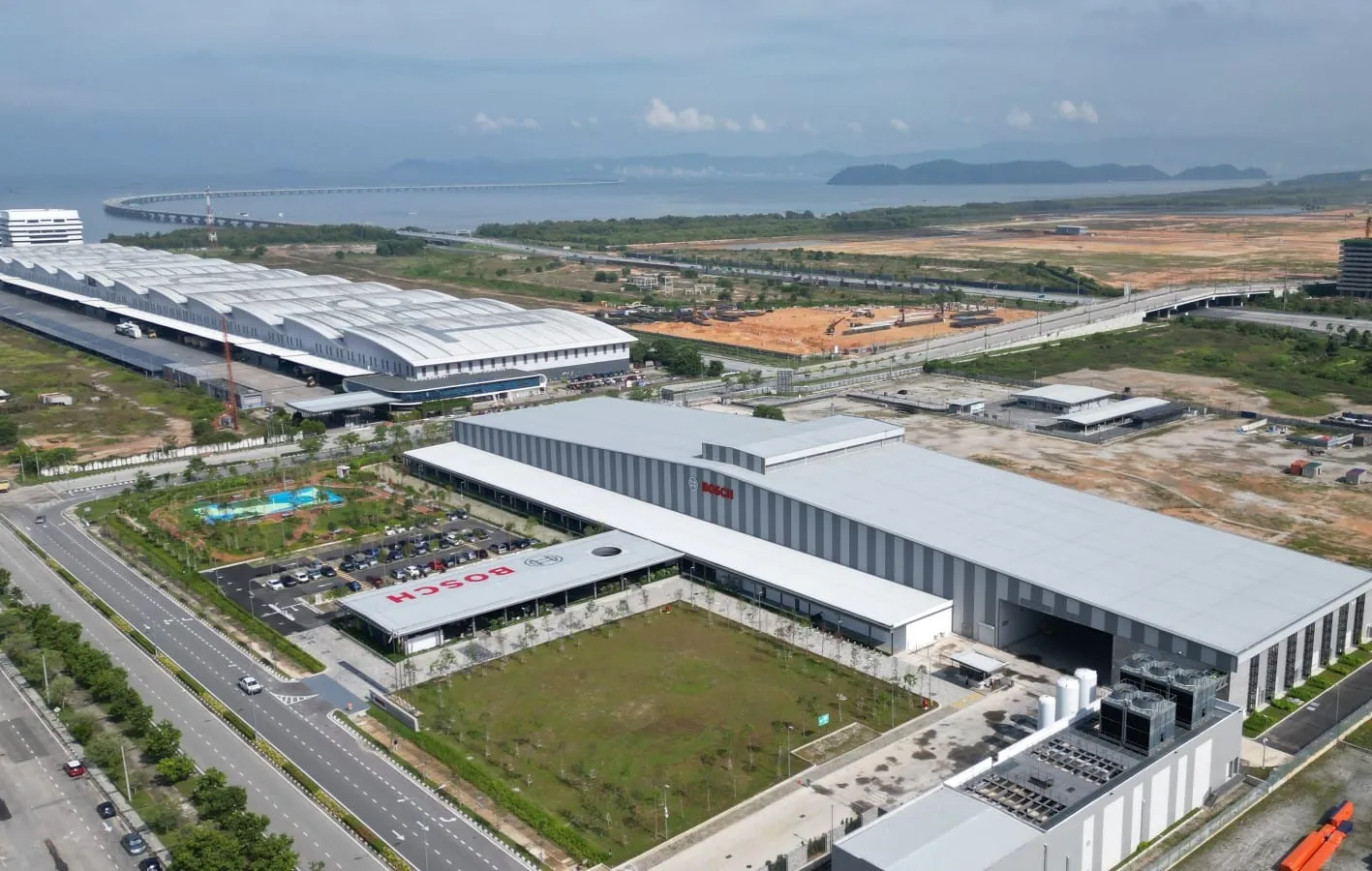
Bosch makes chips and sensors in its wafer fabs in Reutlingen and Dresden. In August 2023 it opened a test centre at Batu Kawan in Penang, Malaysia, its fourth site in Penang.
Bosch in Penang
Penang is a small island state in the north-west of Malaysia, and one of the quiet giants of the chip world. Intel, AMD and many others have plants there, and according to Bosch, Penang has earned more than 5% of the world’s semiconductor revenue in recent years. Malaysia as a whole handles around 13% of global backend work: the cutting, packaging and testing that turns finished wafers into chips you can buy.
Bosch is one of the bigger employers on the island too. With the new test centre, its Penang locations have about 4,200 associates, which makes Penang Bosch’s largest location in Southeast Asia.
My part
At the same time as the Roseville project, from April to September 2023, I worked in the PMO of the project lead team that brought this test centre into operation. The two projects ran side by side, one in California and one in Malaysia.
Some details of this project, such as internal figures, documents and decisions, are covered by a non-disclosure agreement. This page only uses what Bosch has made public, plus a general description of my role.
The challenge
Build an additional test centre in Malaysia for the final testing of chips made at other Bosch sites, and bring it into operation. Building, manufacturing, IT, logistics and quality all had to work towards the same plan.
The technology
Frontend and backend: chipmaking has two halves. A useful picture is a sheet of stamps. In the frontend, the whole sheet is printed: circuits are built up layer by layer on a silicon wafer, in Bosch’s case in its wafer fabs in Dresden and Reutlingen. In the backend, the sheet is cut into single stamps, each one is packed, and each one is checked before it is sold.
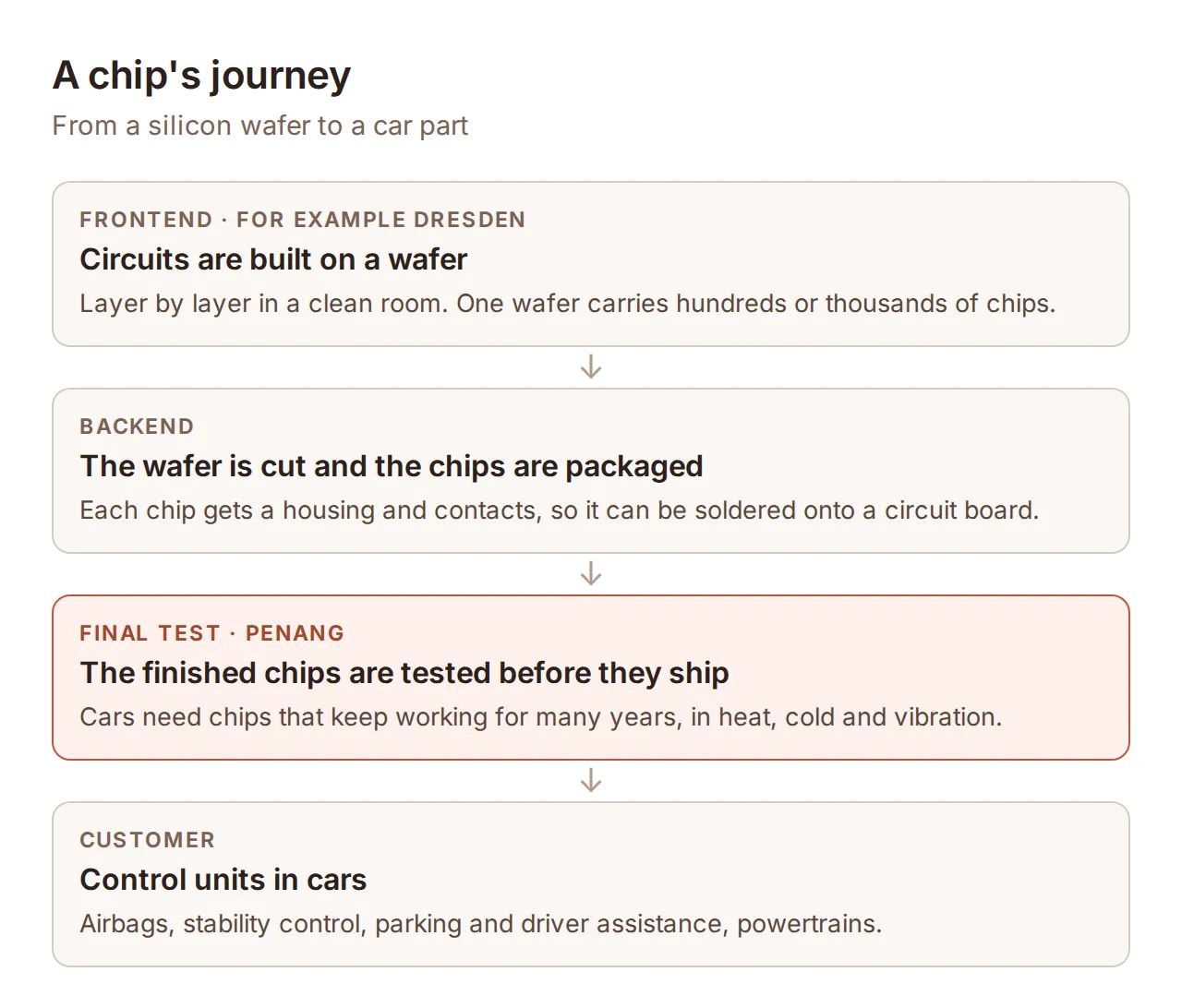
What Penang does: it is a backend site for the final test of chips and sensors made at other Bosch sites, especially the 300 mm fab in Dresden. It tests automotive ICs and MEMS sensors (tiny sensors that measure movement or pressure, for example to decide when an airbag fires). Car chips have to keep working for many years in heat, cold and vibration, so the quality bar is far higher than for a typical phone or laptop chip. Bosch describes the centre as a fully connected plant and one of the most advanced semiconductor test centres in Southeast Asia.
Why test in Asia at all: many of Bosch’s partners and customers are in Asia. Testing close to them shortens delivery routes.
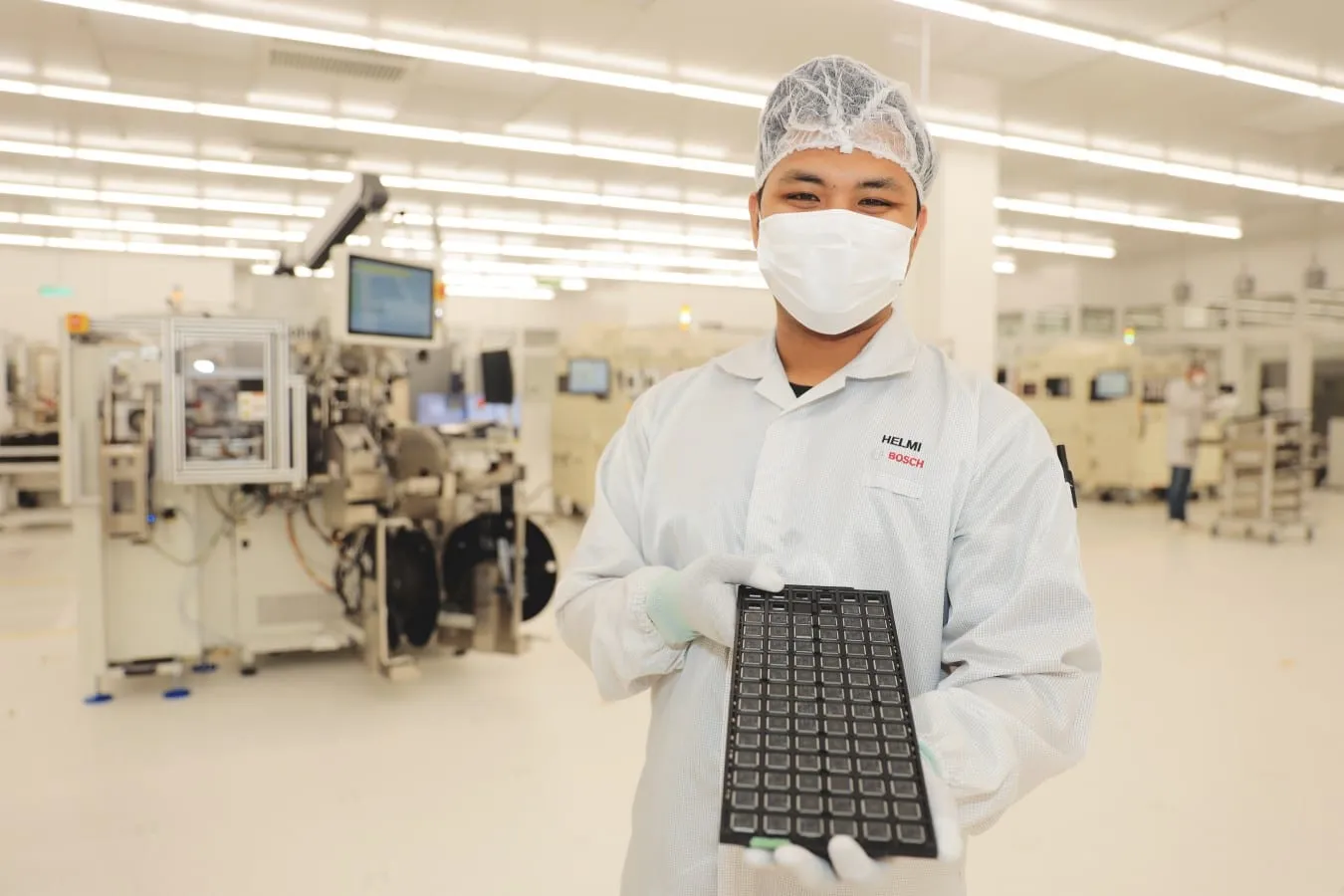
The numbers: the centre covers more than 18,000 m² of clean rooms, offices and labs. Bosch invested €65 million in the first stage and plans around €350 million in total by the mid-2030s, with up to 400 associates working there.
What I did
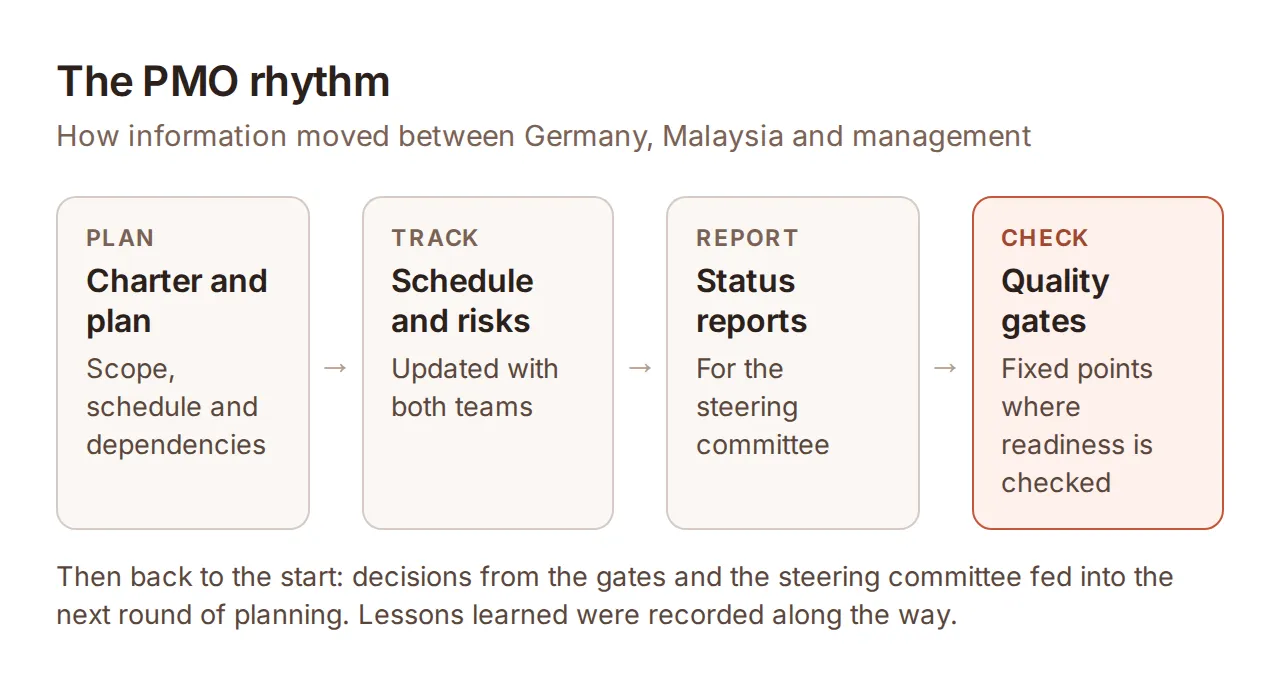
- Worked as a member of the project lead team in the PMO.
- Helped create the project charter and the project management plan.
- Created and helped create project documents: templates, lessons-learned records and a change-management workflow.
- Kept the schedule and the dependencies between the workstreams up to date.
- Tracked risks and prepared status reports for the steering committee and senior management.
- Coordinated project information between teams in Germany and Malaysia.
- Prepared and followed up workshops and quality-gate meetings.
Result
The test centre opened in August 2023 and is in operation.
What I learned
With teams in Germany and Malaysia, a shared, up-to-date schedule and clear status reports matter more than any single meeting. Quality-gate meetings showed me the value of fixed checkpoints: everyone knows in advance what must be ready, and problems surface while there is still time to fix them.
Quellen
- Bosch: Opening of the semiconductor test centre in Malaysia (August 2023) ↗bosch-presse.de
- Bosch Semiconductors: the 300 mm wafer fab in Dresden ↗bosch-semiconductors.com
- Bosch Semiconductors: the test centre in Penang ↗bosch-semiconductors.com
Kontakt
Fragen, Ideen oder selbst etwas Ähnliches ausprobiert? Ich freue mich, davon zu hören. E-Mail schreiben