InnoRes · Drones
Bringing structure to a drone project
Milestones, Jira workflows and team coordination for a start-up building infrastructure for drone delivery.
Auf einen Blick
- Role
- Project Manager
- Period
- Sep 2024 – Aug 2025
- Team
- Internal team, external stakeholders and technical interfaces
- Tools
- Jira, Confluence, Microsoft Teams
Hintergrund
InnoRes Analytics is an international firm for intellectual-property and R&D services, with offices in India and the US. The client, Drone Industry Systems Corporation, develops infrastructure for drone and eVTOL delivery of people and cargo.
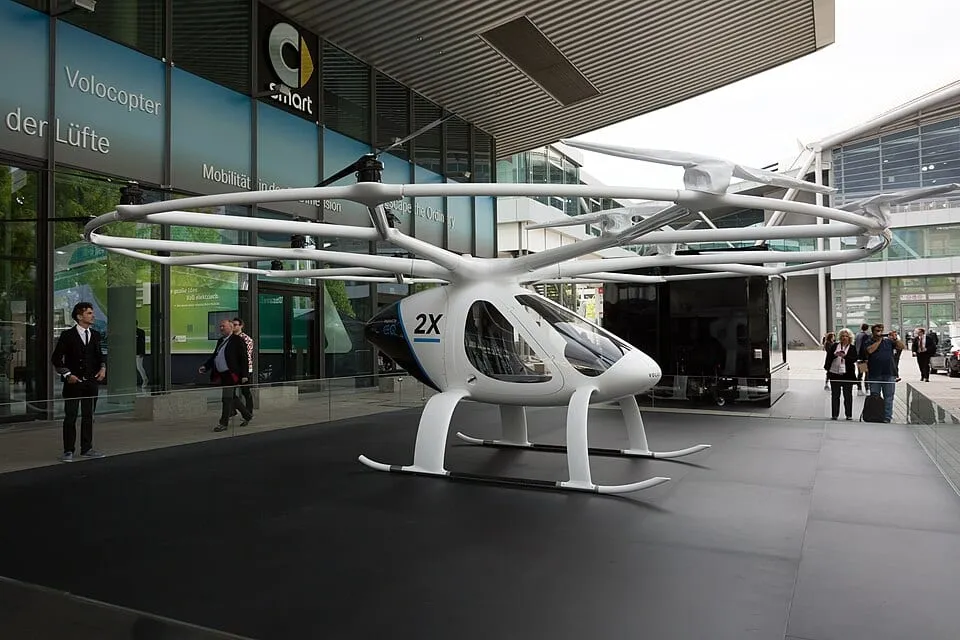
Drone ports and air taxis
The client works on something most cities do not have yet: places for drones and air taxis to land. Air taxis of this kind are called eVTOLs (electric vertical take-off and landing). They start and land like a helicopter, but run on batteries, and many look like an oversized drone. A vertiport is to them what a helipad is to a helicopter, with charging, parcel handling and booking built in. The company develops smart drone ports and vertiports for rooftops and the ground, a ready-made “vertiport-in-a-box” system, and smart mailbox landing pads where a delivery drone can drop a parcel.
My part
From September 2024 to August 2025 I was the project manager on the InnoRes side. I led our team and ran the planning, the meetings and the reporting.
Client work at InnoRes is confidential, so this page describes my role and the methods I used, not the client’s internal details.
The challenge
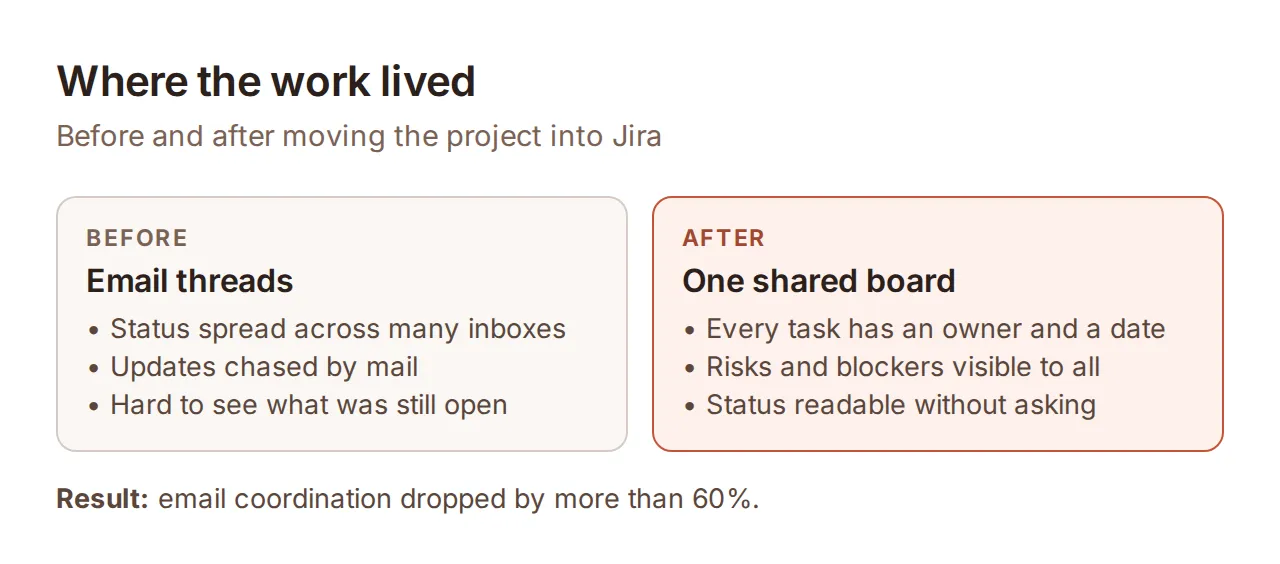
An international project with many parties: internal teams, the client abroad and several technical interfaces. Much of the coordination ran over email, and priorities, schedules and open issues had to stay clear for everyone.
What I did
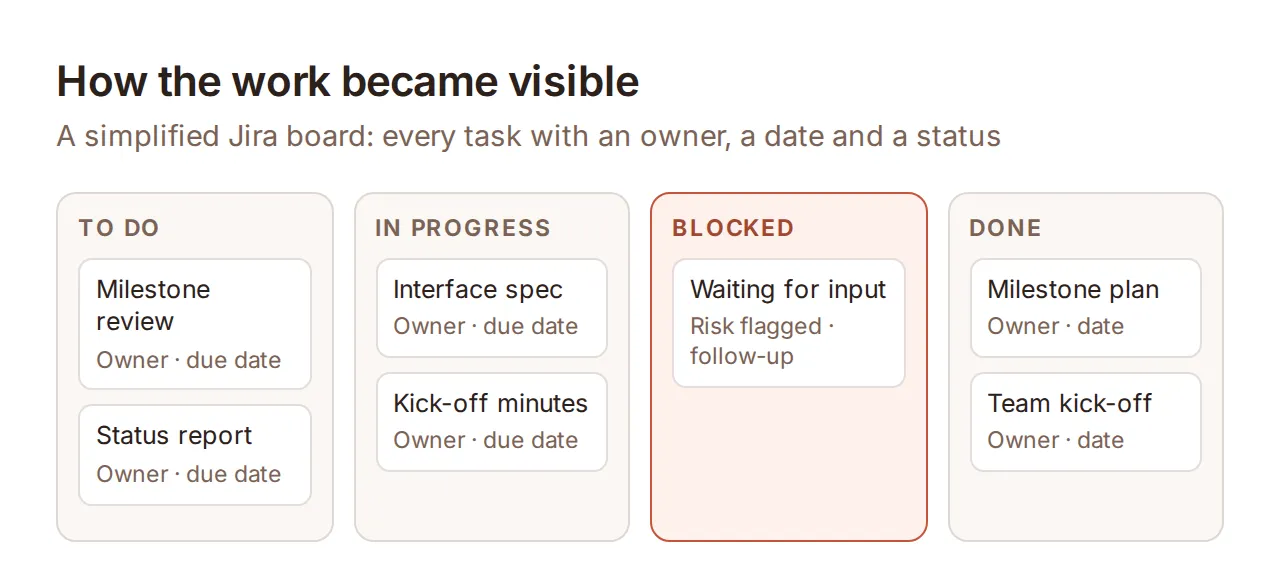
- Built a milestone plan with clear deliverables, dates and owners.
- Introduced Jira-based workflows for task tracking and project documentation.
- Tracked risks, blockers and dependencies, and followed up on critical topics.
- Planned and led kick-offs, status meetings and alignment calls, and sent status reports and minutes afterwards.
- Led a team: assigned tasks and supported day-to-day coordination.
Result
Email coordination dropped by more than 60%, and project information stayed transparent across all workstreams.
What I learned
The biggest gain did not come from working harder, but from changing where the work lives. Once tasks, owners and decisions moved from email threads into Jira, everyone could see the same status, and most of the back-and-forth simply disappeared. Leading the team also taught me that clear owners and deadlines prevent more problems than follow-ups solve.
Quellen
- DroneLife: Drone Industry Systems and its vertiport-in-a-box (September 2021) ↗dronelife.com
- Wikipedia: eVTOL aircraft ↗en.wikipedia.org
- InnoRes Analytics: services ↗innoresanalytics.com
Kontakt
Fragen, Ideen oder selbst etwas Ähnliches ausprobiert? Ich freue mich, davon zu hören. E-Mail schreiben