University project · Mechanical engineering
Designing a multi-plate clutch
A study of clutch types and friction materials, and a 3D model of a multi-plate clutch built part by part in Siemens NX.
Auf einen Blick
- Type
- Bachelor's mini project, done individually
- Period
- 2018
- Topic
- Multi-plate friction clutch
- Tools
- Siemens NX (Unigraphics)
Hintergrund
An individual mini project in my Bachelor of Technology in Mechanical Engineering at Malla Reddy College of Engineering and Technology in Hyderabad, India, completed in 2018.
What a clutch does
A car engine is always spinning while it runs, but the wheels sometimes need to stand still, and the driver needs to change gears. The clutch is the link in between. Pressed together, it passes the engine’s turning force (torque) to the gearbox. Pulled apart, it disconnects them.
A simple comparison: hold two plates together tightly, and turning one turns the other. Loosen your grip, and they slip. A friction clutch works exactly like that, with special materials that grip strongly and survive a lot of heat.
Comparing clutch types
The first part of the project was a study of the main types:
- Friction clutches, flat or cone-shaped, the most common type in cars.
- Dog clutches, which lock together with teeth and never slip.
- Overrunning clutches, the freewheel that lets a bicycle roll while you stop pedalling.
- Safety clutches, which slip on purpose to protect a machine, for example when a lawn mower blade hits a stone.
- Centrifugal, hydraulic and electromagnetic clutches for special uses.
Why multiple plates?
A single pair of plates can only pass so much torque before it slips. Making the plates bigger is often not possible because of space. The solution is to stack several pairs: a multi-plate clutch. This is what you find in motorbikes, automatic gearboxes and heavy machines.
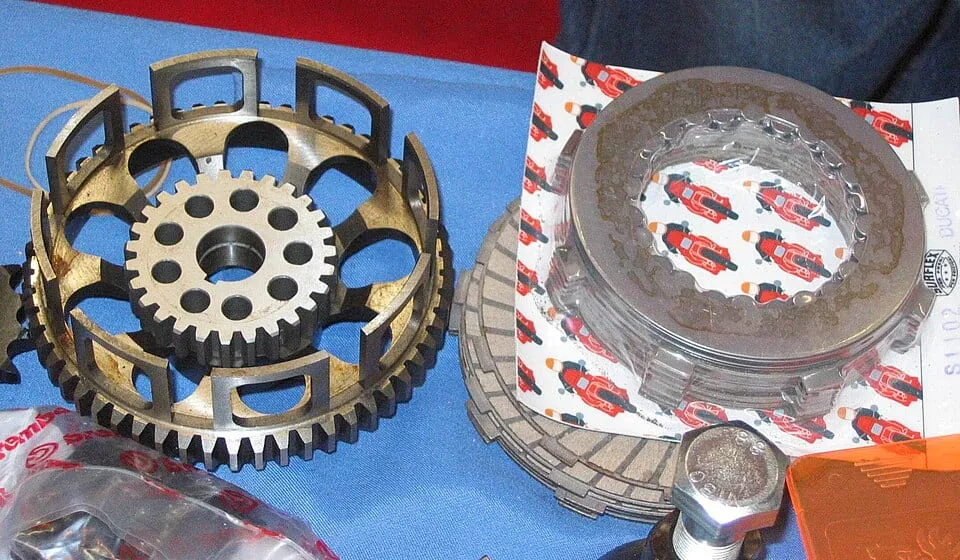
The friction material is the most important part. It needs high and stable friction across temperatures, must resist wear, conduct heat away, handle high pressure, and be safe; asbestos, once common, is no longer allowed. I also compared dry clutches, which grip harder but wear faster, with wet clutches running in oil, which wear far less and handle heat much better.
Building the model
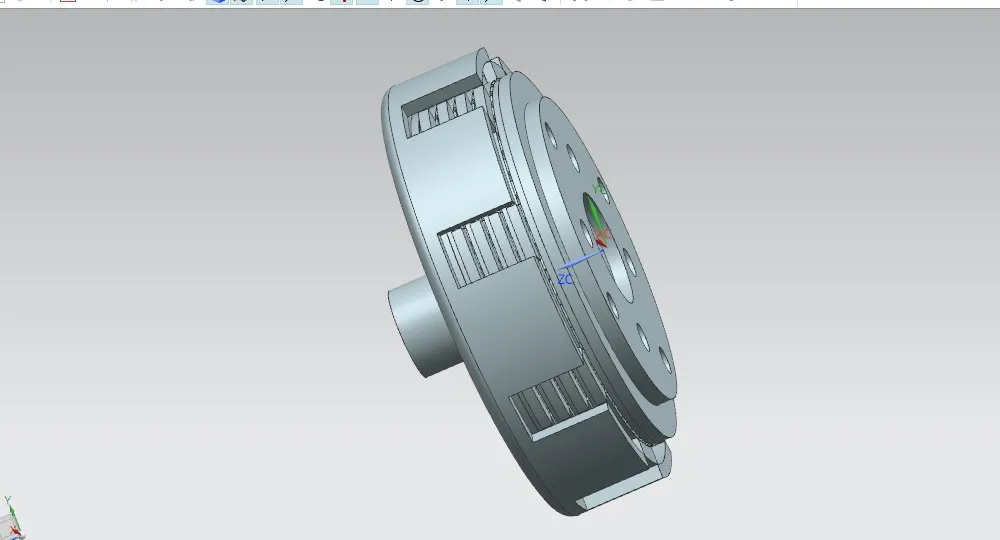
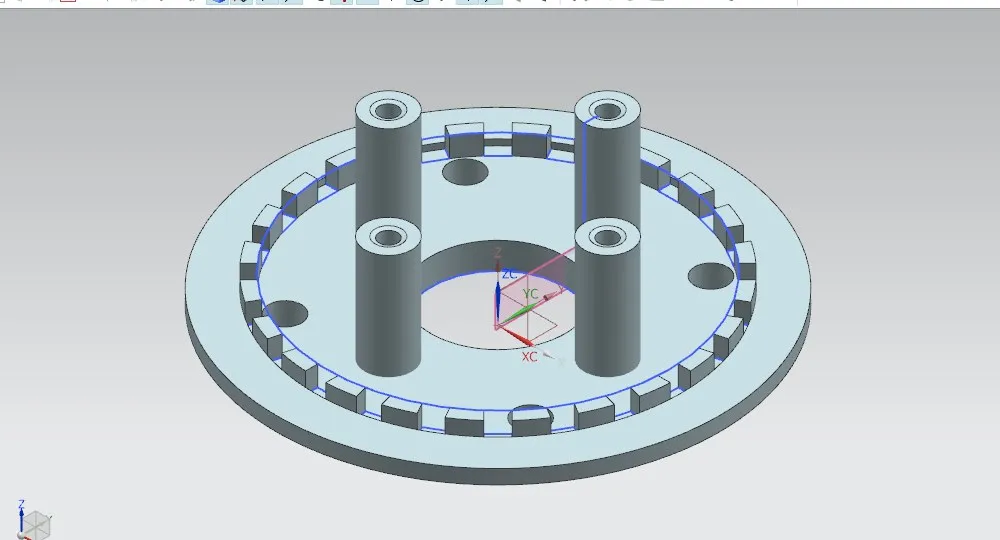
The second part was designing the clutch in Siemens NX, a professional CAD tool used across the automotive industry. I modelled each part from a sketch, then extruded, cut and patterned it into a solid part:
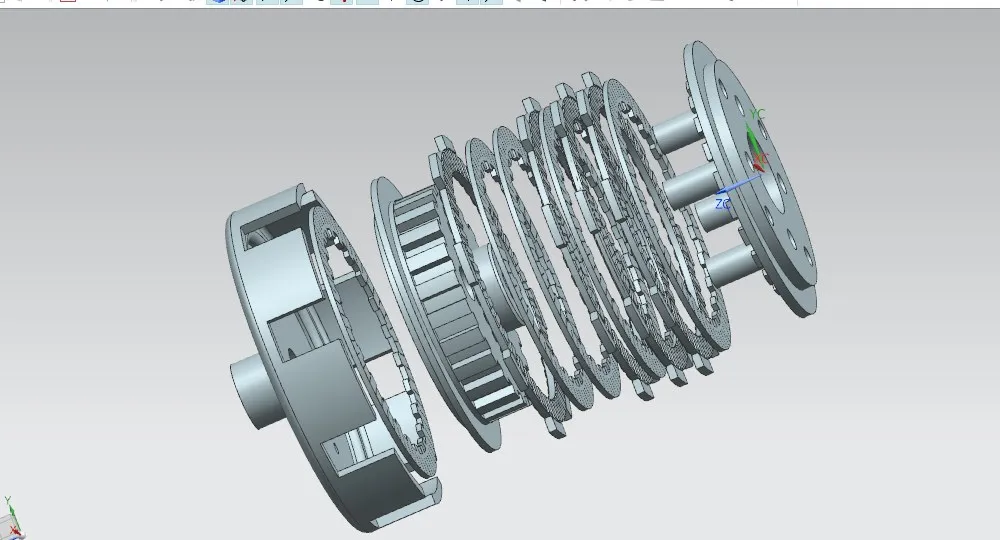
- Base plate, which holds the friction plates and mounts to the engine side.
- Double plate with splined profiles inside and out.
- Two kinds of friction plates, one with inner and one with outer splines, so that they alternate and lock to opposite sides.
- Cover plate, which connects to the output shaft.
Finally, I put all parts together into an assembly using constraints such as touch, align and distance, so that each part sits exactly where it belongs, and created an exploded view to show how it all fits.
Looking back
This was one of my first projects where a technical topic had to become a working design, part by part, with every piece depending on the others. Defining the parts, the order to build them in, and how they connect is surprisingly close to how I now break a project down into work packages.
Quellen
- IJSTE: Study the design aspects and function of wet type multi-plate clutch (October 2015) ↗ijste.org
- Wikipedia: Clutch ↗en.wikipedia.org
- Wikipedia: Multi-plate clutch ↗en.wikipedia.org
Kontakt
Fragen, Ideen oder selbst etwas Ähnliches ausprobiert? Ich freue mich, davon zu hören. E-Mail schreiben