Meta's creepy* glasses: who else is watching?
· 6 Min. Lesezeit
*Sorry, smart glasses.
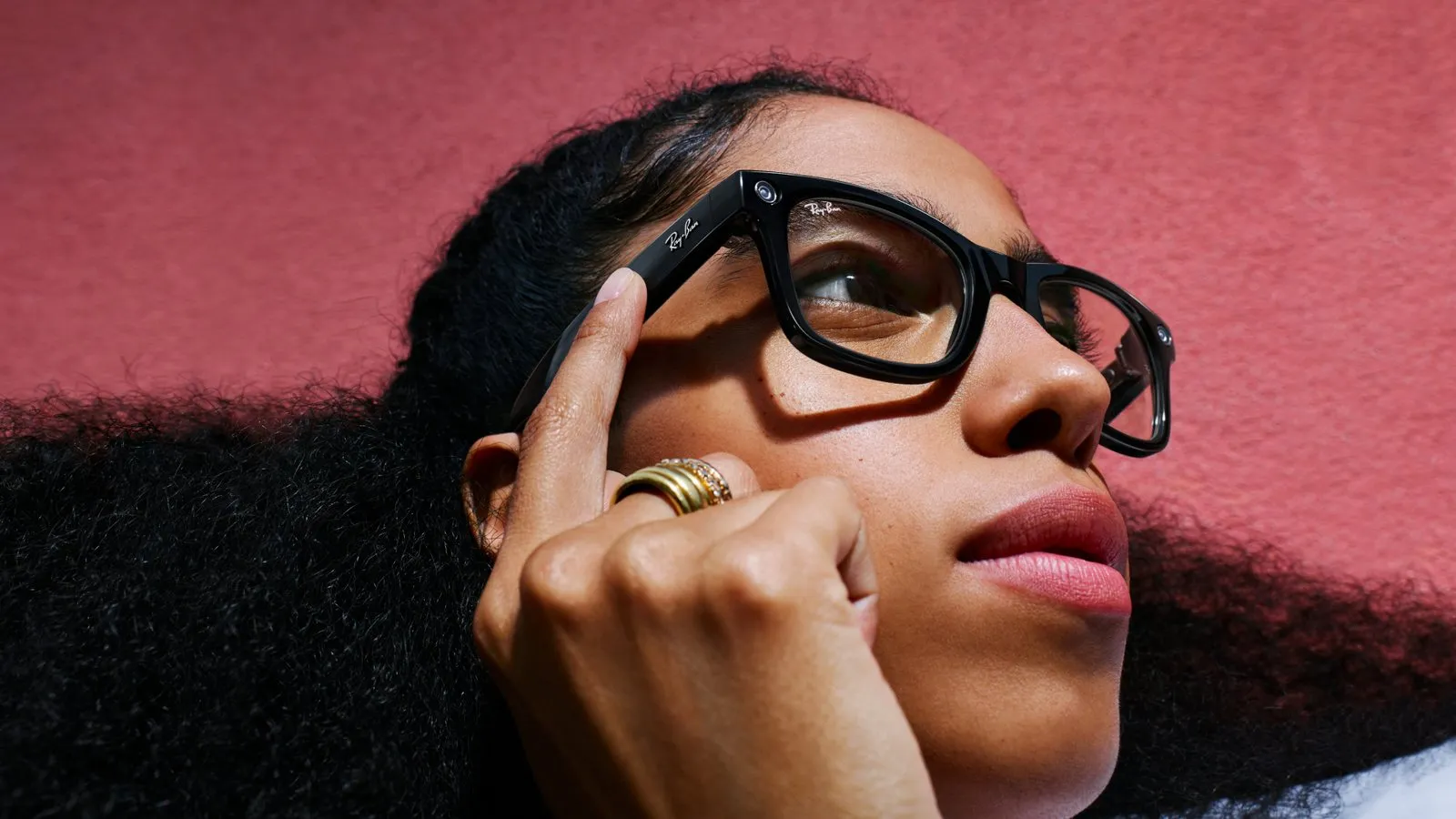
From a few metres away, they look like ordinary Ray-Bans. Look closer and there is a tiny camera in one corner of the frame and a small light in the other. Meta and EssilorLuxottica, the company behind Ray-Ban, sold more than 7 million pairs of their smart glasses in 2025 alone.
I find the idea genuinely clever: a camera, speakers, microphones and an AI assistant, hidden in something people already wear every day. But the same things that make the glasses clever also make them a privacy problem, for the people around the wearer and for the wearer too.
From Ray-Ban Stories to Ray-Ban Meta
- September 2021: Ray-Ban Stories. Facebook’s first attempt, from $299. Two 5-megapixel cameras, speakers and microphones, and a small white light that switches on while recording.
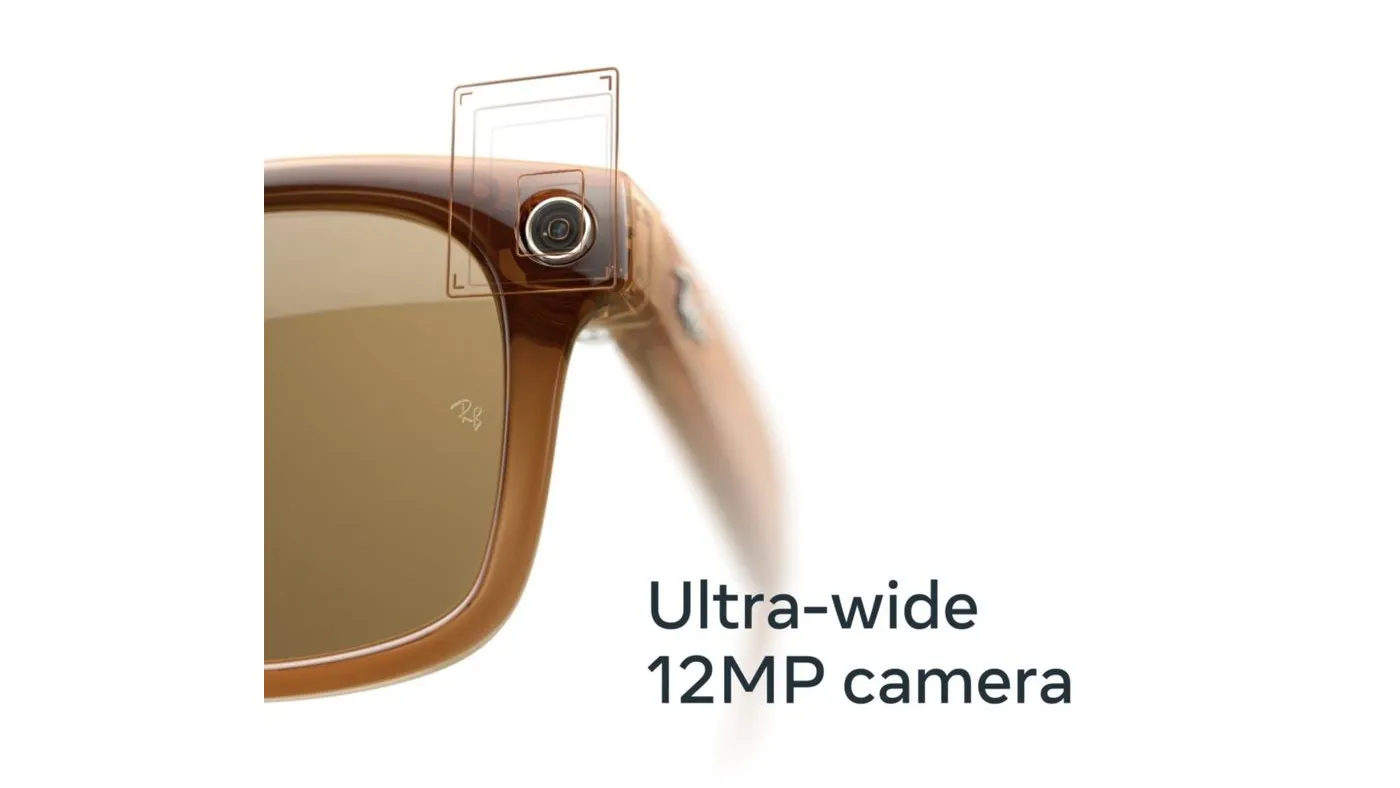
- 27 September 2023: Ray-Ban Meta. The real start. A 12-megapixel ultra-wide camera, 1080p video, livestreaming to Instagram and Facebook, and Meta AI built in, from $299.
- February 2025. EssilorLuxottica reported 2 million pairs sold since the 2023 launch.
- 17 September 2025: the second generation. Ray-Ban Meta Gen 2 from $379, with 3K video and about twice the battery life. Next to it came the Meta Ray-Ban Display for $799, the first pair with a small screen inside the lens.
- 2025 as a whole: more than 7 million pairs sold, over three times as many as in 2024.
The selling point is simple: you can take a photo, film a video or ask “Hey Meta, what am I looking at?” without ever taking out your phone.
The small white light
A phone held up in front of someone is obvious. Glasses are not. So Meta added a white LED on the front of the frame that lights up while the camera is recording. It is the main way people nearby know they are being filmed.
Regulators doubted it from the start. In September 2021, a few days after Ray-Ban Stories launched, Ireland’s Data Protection Commission and Italy’s data protection authority said it had not been shown that the light worked as a warning in real life. They asked Facebook to prove it and to run a campaign explaining the glasses to the public. Early testers also found that a piece of tape over the light did not stop the camera.
The newer glasses refuse to record when the light is covered. That closed the tape trick, but not every trick.
How people get around it
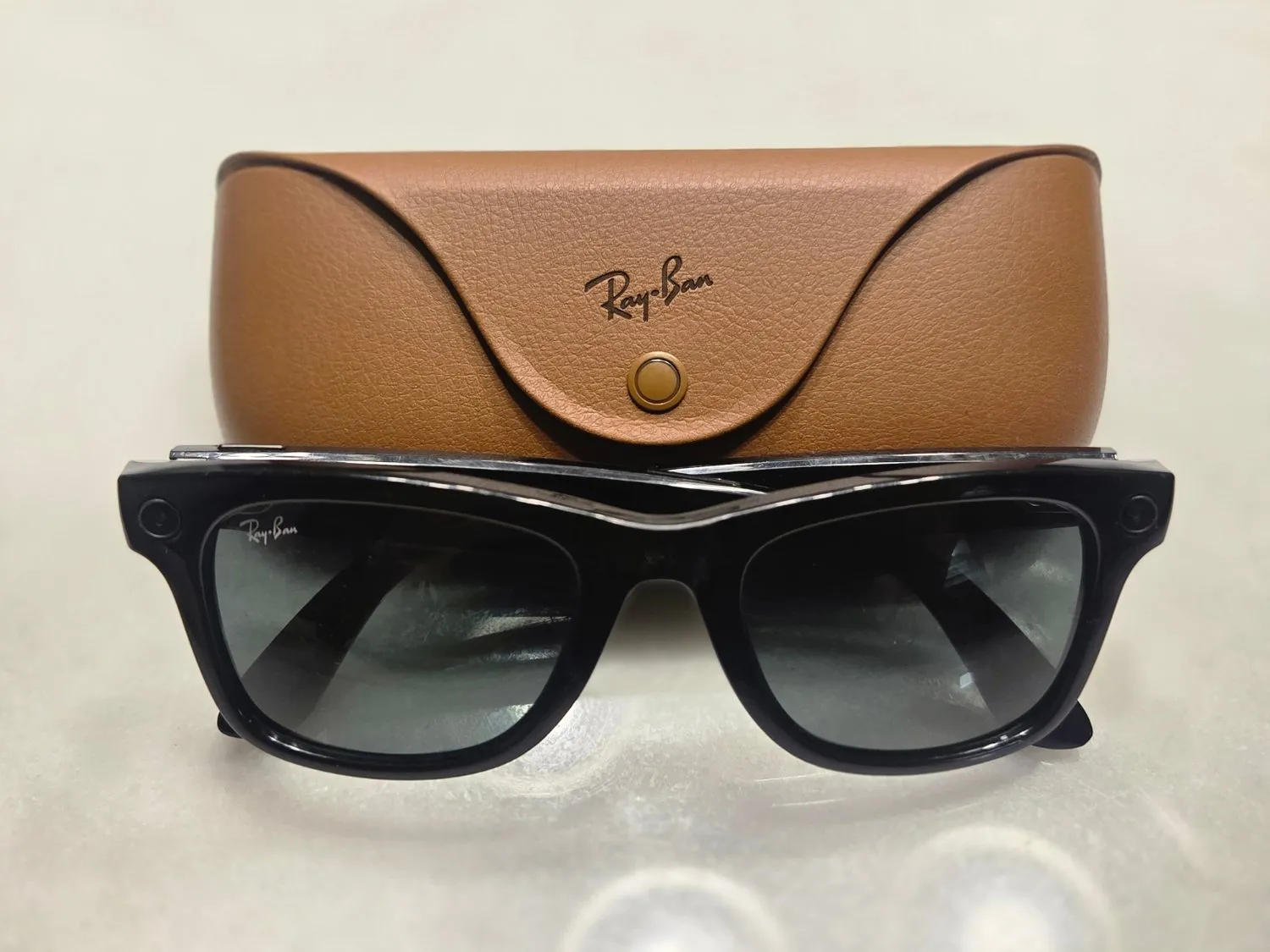
In October 2025, the tech news site 404 Media reported on a hobbyist in the US offering a $60 service that physically removes the light. The glasses keep working and still look new; only the warning is gone. Buyers came from several US states and from abroad. In July 2026, Meta pushed an update that switches the camera off if the light has been tampered with, said it was removing ads and listings for such services, and announced legal action against the people offering them.
The light matters, because the misuse is real:
- Filming women without their knowledge. A BBC investigation found men using the glasses to secretly film women in the UK, the US and Australia and posting the clips on social media. Some clips reached millions of views. A study at the University of Sydney looked at 350 such Instagram videos; in 93.3% of them, comments were left open. Women described abusive messages, phone calls and strangers turning up at their work.
- Identifying strangers in seconds. In October 2024, two Harvard students connected the glasses’ livestream to a face search engine and public databases. Looking at a stranger was enough to bring up their name, and sometimes their address and phone number, on a phone within seconds. They built it to show the risk and did not release the code.
- Planning an attack. In January 2025, the FBI said the man behind the New Year’s Day attack in New Orleans had worn Meta glasses months earlier to film Bourbon Street.
None of this needs any special skill. That is what worries me most.
Where your footage goes
The second problem is less visible, and it affects the wearer too.
Meta’s position has been that photos and videos stay on your phone unless you share them. But “sharing” includes asking Meta AI about what you see. In October 2024, Meta confirmed to TechCrunch that images and videos shared with Meta AI may be used to improve it. In April 2025, Meta changed the rules: the AI camera features were switched on by default, and voice recordings after “Hey Meta” are now stored for up to a year to improve Meta’s products. There is no way to opt out of that storage, only to delete recordings one by one in the app.
At the end of February 2026, two Swedish newspapers, Svenska Dagbladet and Göteborgs-Posten, showed what this means in practice. Footage from the glasses ended up in Nairobi, Kenya, with data annotators working for Sama, a company Meta hired to label images and videos so its AI learns to understand what it sees.
The workers described what they saw:
“In some videos you can see someone going to the toilet, or getting undressed.”
Others described people having sex, bank cards filmed by accident and people watching pornography while wearing the glasses, often without the wearer realising the glasses were recording. Meta says faces are blurred automatically. A former employee told the reporters that the blurring sometimes fails, especially in difficult lighting.
Meta’s answer was that when live AI is used, it processes the media according to the Meta AI terms of service and privacy policy, and that contractors review data to improve people’s experience, “as many other companies do”.
What followed:
- March 2026: a class action was filed in California against Meta and Luxottica of America. It argues that glasses advertised as “designed for privacy, controlled by you” should not send intimate footage to reviewers abroad. The case is still open.
- March 2026: the UK’s Information Commissioner’s Office wrote to Meta asking how the footage is processed, stored and reviewed. Privacy lawyers in Europe questioned whether there is a legal basis for sending it to Kenya.
- 31 March 2026: Kenya’s data protection office opened its own investigation.
- April 2026: Meta ended its contract with Sama, saying the company did not meet its standards. More than 1,100 workers in Nairobi lost their jobs with six days’ notice. Sama said it had never been told of any problem, and workers’ groups called it retaliation for speaking to the press.
What I take from it
There are two sides to these glasses.
The people around the wearer never agreed to anything. The light is the only warning they get, and until this summer it could be removed for $60.
The wearer agrees to terms, but most people do not read that “ask the AI what I am looking at” can mean “a stranger in another country may watch this to train the AI”. This is not unique to Meta; voice assistants and chatbots have used human reviewers for years. But a camera on your face, in your home and in your bathroom, is a different level.
Working on projects, I have learned that a risk you accept quietly is still a risk. You only make it manageable by being honest about it. Here, the honest version would be simple: tell users clearly, every time, when footage leaves the device and who might see it. And protect the warning light from the start. Meta’s July update shows it can be done; it just took a $60 mod and months of headlines to get there.
If you own a pair
- Treat the AI like a person standing next to you. Do not ask it to look at anything you would not show a stranger.
- Turn off “Hey Meta” if you do not need it, and delete stored voice recordings in the Meta AI app.
- Take the glasses off in bathrooms, bedrooms, changing rooms and anywhere people expect privacy.
- Tell people when you are recording. The light helps, but saying it is better.
Quellen
- TechCrunch: Facebook debuts its Ray-Ban Stories smart sunglasses (September 2021) ↗techcrunch.com
- TechCrunch: Facebook warned over 'very small' indicator LED on its smart glasses (September 2021) ↗techcrunch.com
- Meta Newsroom: Introducing the new Ray-Ban Meta smart glasses (September 2023) ↗about.fb.com
- TechCrunch: Meta confirms it may train its AI on any image you ask Ray-Ban Meta AI to analyze (October 2024) ↗techcrunch.com
- 404 Media: Someone put facial recognition tech onto Meta's smart glasses to instantly dox strangers (October 2024) ↗404media.co
- Fortune: New Orleans attacker used Meta smart glasses, FBI says (January 2025) ↗fortune.com
- TechCrunch: If you own Ray-Ban Meta glasses, you should double-check your privacy settings (April 2025) ↗techcrunch.com
- 404 Media: the $60 mod that disables the recording light (October 2025) ↗404media.co
- UploadVR: Meta and EssilorLuxottica sold 7 million smart glasses in 2025 ↗uploadvr.com
- The Decoder: Meta sends private AI glasses footage to Kenya with few safeguards (March 2026) ↗the-decoder.com
- TechCrunch: Meta sued over AI smart glasses' privacy concerns (March 2026) ↗techcrunch.com
- TechCabal: Kenya's data regulator asked to probe Meta's smart glasses footage (March 2026) ↗techcabal.com
- The Next Web: Meta ends Sama contract after Kenyan workers report seeing intimate footage (April 2026) ↗thenextweb.com
- The Next Web: Meta patches the mod that turned its Ray-Ban glasses into secret spy cams (July 2026) ↗thenextweb.com