Do AI agents need to be cute?
· 8 min read
Meta’s new AI agent can read your email, fill out forms, negotiate on your behalf and pay with your card. And it looks like a soft toy.
Muse launched on 8 September. Its default face is a small, fuzzy, egg-shaped creature with rosy cheeks and a happy little smile, known inside Meta as Jolly. Two weeks later, at Meta’s Connect event, the company showed Muse Charm, a keychain-sized device with a tiny screen where your Muse lives, like a modern Tamagotchi. That week, Muse went to the top of the App Store.
Then, on 29 September, OpenAI showed Dots, its own agent, with optional colourful characters that wear berets, bow ties and glasses.
So two of the biggest AI companies in the world, in the same month, decided that the right face for an AI agent is a cuddly one. That made me curious. Why cute? What does it do to us? And do AI agents really need it?
What Muse actually is
It helps to be clear about what is behind the fluff, because Muse is not a chatbot.
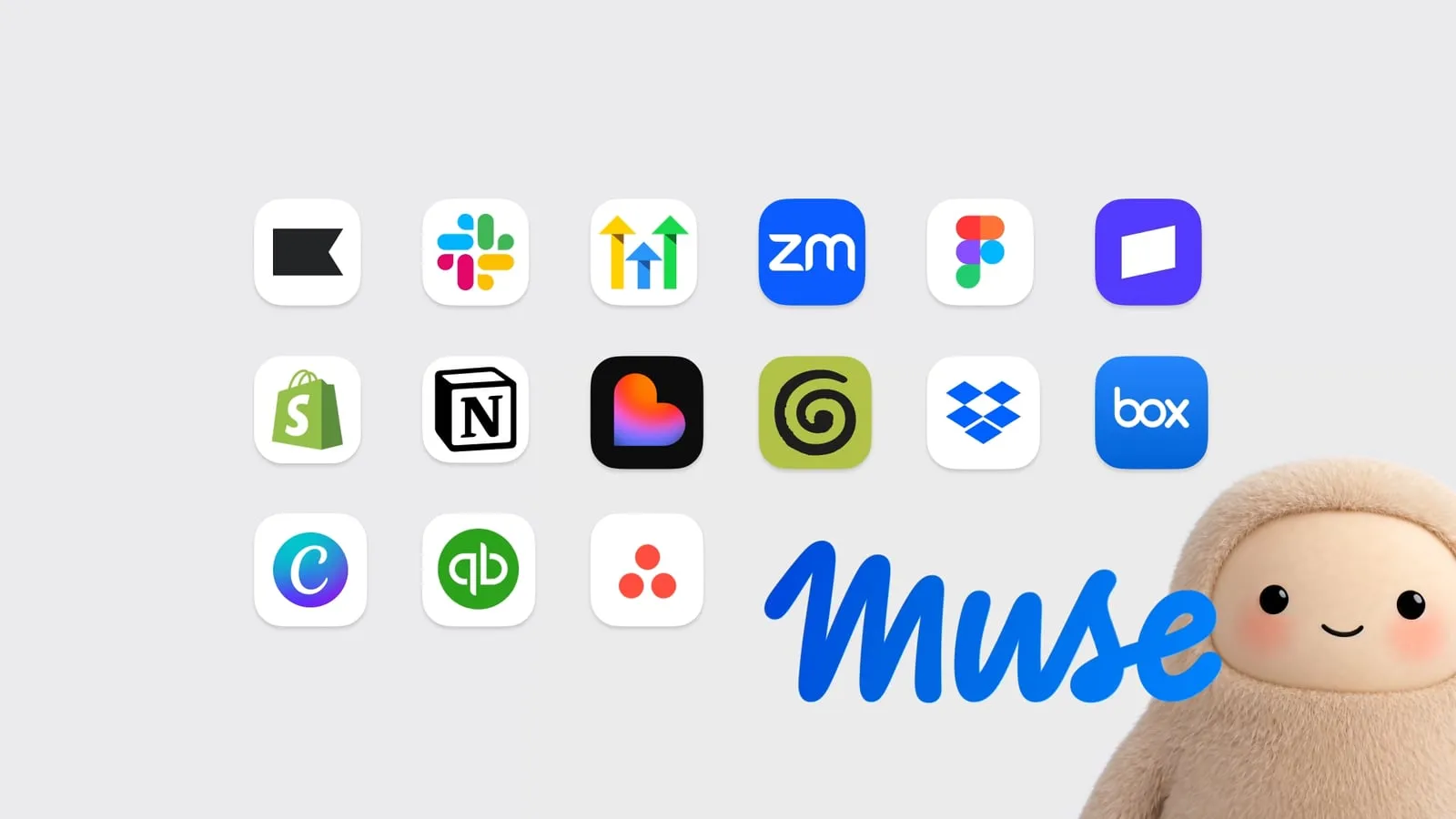
Meta calls it a personal AI agent. You tell it a goal, and it works on it by itself, even after you close the app. It can open a browser, fill out forms, send emails, book travel and buy things. Meta says it can help sell a car for more, lower a bill or turn a recipe video you saved on Instagram into a grocery list. To do that, it needs access: to your email, your calendar, your shopping accounts and your payment method.
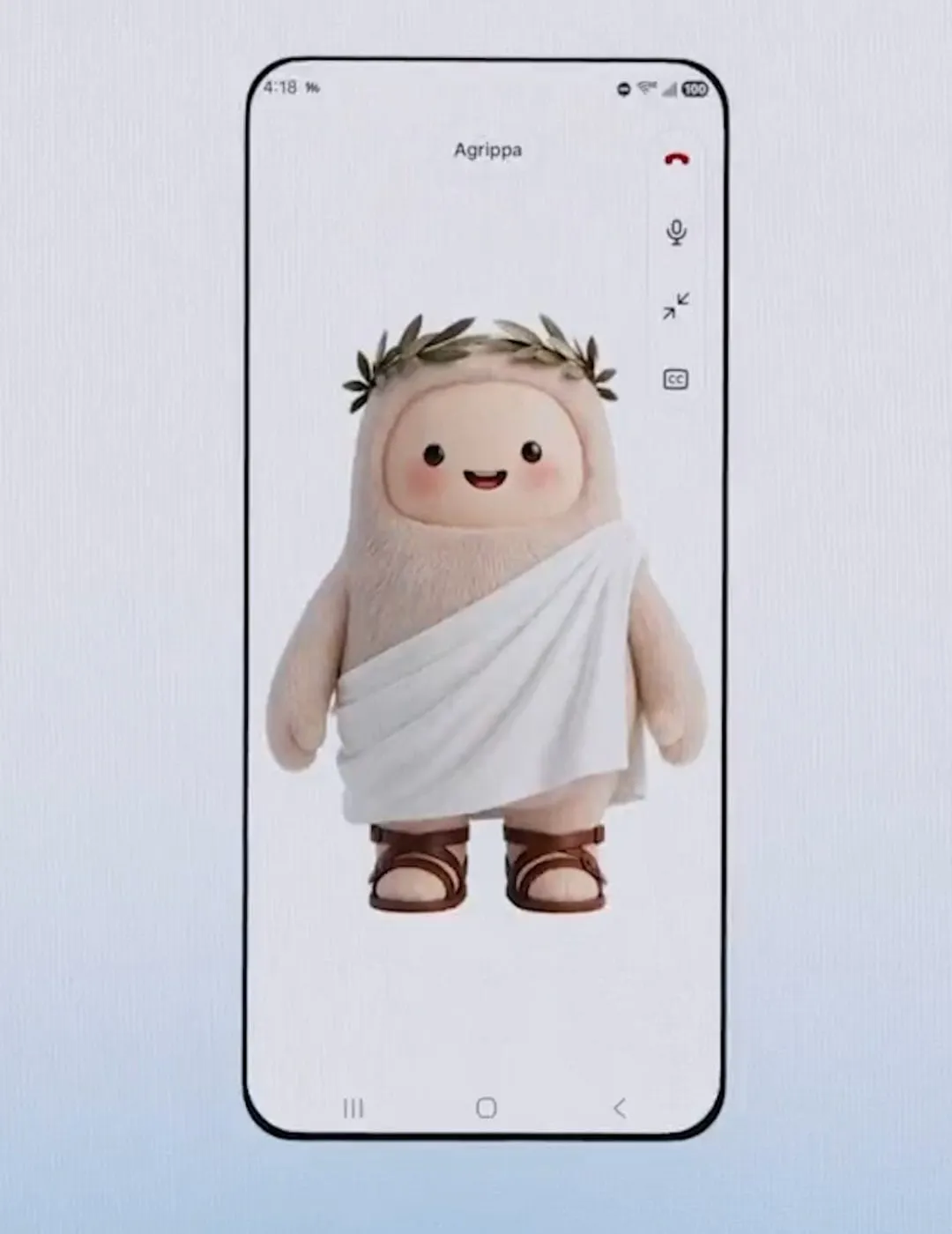
You can also change its look. You can give it a name, a different outfit and a different voice. Mark Zuckerberg showed his own Muse, called Agrippa, in a toga and a laurel wreath.
Why cute works on us: the baby schema
In 1943, the Austrian scientist Konrad Lorenz described what he called the Kindchenschema, the baby schema. Babies, puppies and kittens share a set of features: a big round head, a small body, big eyes, round cheeks, a small nose and chin. Lorenz argued that these features trigger an automatic response in adults: we want to look, protect and care.
Later research made this measurable. In 2009, a team led by Melanie Glocker took photos of babies and edited them to look more or less baby-like, for example with bigger eyes or a rounder face. In a brain scanner, the more baby-like faces activated the nucleus accumbens more strongly. That is part of the brain’s reward system, the same system that responds to food and other things we want. In simple words: cuteness feels good, and our brain wants more of it.
Look at Jolly again with this in mind. Round body, round head, soft fur, rosy cheeks, a small face. It does not have huge eyes like a cartoon baby, but it ticks most of the other boxes. None of this is an accident. Designers know these features well.
Cute makes us treat things like someone
There is a second, maybe more important effect. Cuteness does not only make us want to protect something. It makes us want to interact with it.
In 2011, the psychologists Gary Sherman and Jonathan Haidt argued that cuteness is less about caregiving and more about social engagement. When something is cute, we want to play with it, talk to it, and we start treating it as if it had a mind of its own.
We do this with computers anyway. In the 1990s, researchers at Stanford, led by Clifford Nass and Byron Reeves, ran a long series of experiments and found that people treat computers as if they were social beings, even when they know they are not. In one study, people were asked to rate a computer’s performance. When they gave the rating on the same computer, they were more positive, as if they did not want to hurt its feelings.
It goes back even further. In 1966, Joseph Weizenbaum at MIT built ELIZA, a very simple program that imitated a therapist mostly by turning your sentences into questions. He later wrote that his own secretary, who knew exactly how it worked, asked him to leave the room so she could talk to it in private.
So we already treat technology as a someone. A cute face does not create this effect. It turns it up.
Why cute, and not human?
If companies want us to see their agent as someone, why not give it a realistic human face?
Because realistic is risky. In 1970, the Japanese roboticist Masahiro Mori described the “uncanny valley”: the closer a robot gets to looking human without being perfect, the creepier it feels. A cartoon creature never falls into that valley. Nobody expects a fluffy egg to look real, so nothing about it feels wrong.
There is also a calmer reason. A lot of people are afraid of AI right now, of losing their jobs, of their data, of what it might do. A friendly creature is the opposite of a scary robot from a film. It says: this is harmless, this is your little helper.
A public relations professor at Boston University put it clearly in Fortune: a friendly character may lead people to “infer that this AI agent is also approachable, safe, trustworthy, easy to use”. He also made a fair practical point: “It’s much easier to say, ‘Have you met/used Dots?’ than to explain the technical nature of an AI agent.”
Not everyone is impressed. The PR consultant Ed Zitron told Fortune: “It’s entirely marketing.”
The Tamagotchi trick
Muse Charm openly borrows from the Tamagotchi, the egg-shaped virtual pet from Japan that became a craze in the late 1990s. That comparison is more revealing than it looks.
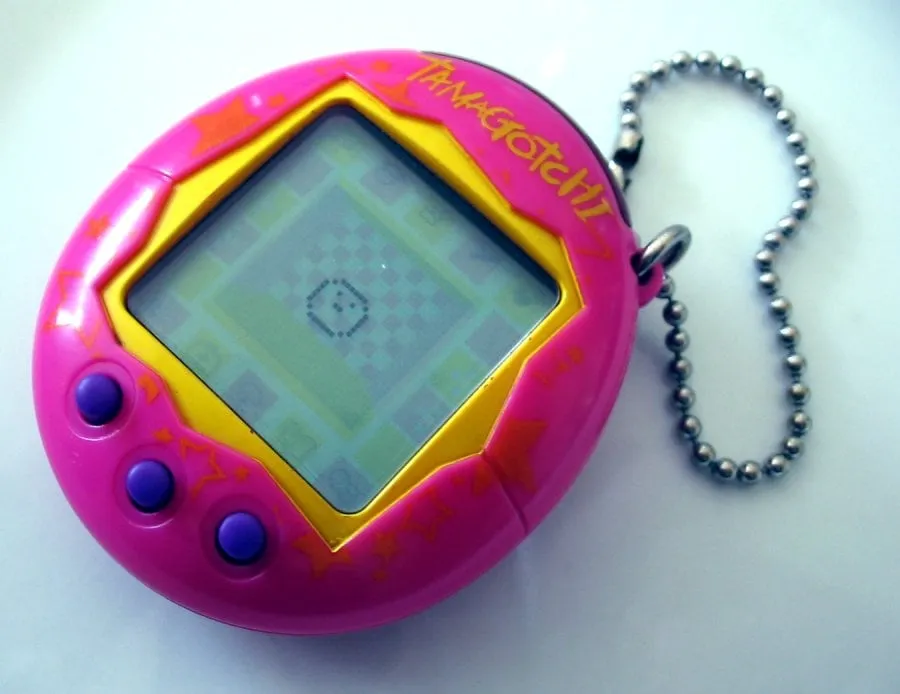
The Tamagotchi worked because it needed you. It got hungry, it got sick, and if you ignored it for too long, it died. Children carried it everywhere and checked it constantly. It was one of the first gadgets designed to create a habit through care, long before apps did the same with notifications and streaks.
Muse turns this around. It is the one that takes care of you: your errands, your bills, your plans. But the loop is similar. A small creature that lives in your pocket, that you check often, that you feel a little attached to. The more you use it, the more it knows about you. The more it knows, the more useful it gets, and the harder it is to leave.
What the cute face can hide
This is the part I find most important. A cute face changes how we feel about something. It does not change what that thing can do.
It makes broad access feel small. To do everything Meta and OpenAI promise, an agent needs your email, your messages, your documents and your payment details. A fluffy toy asking for access feels very different from a dialog box that says “allow access to all your email”. Engadget’s reviewer, who tested Muse for weeks, argued exactly this: the cute design distracts from how much data these agents need.
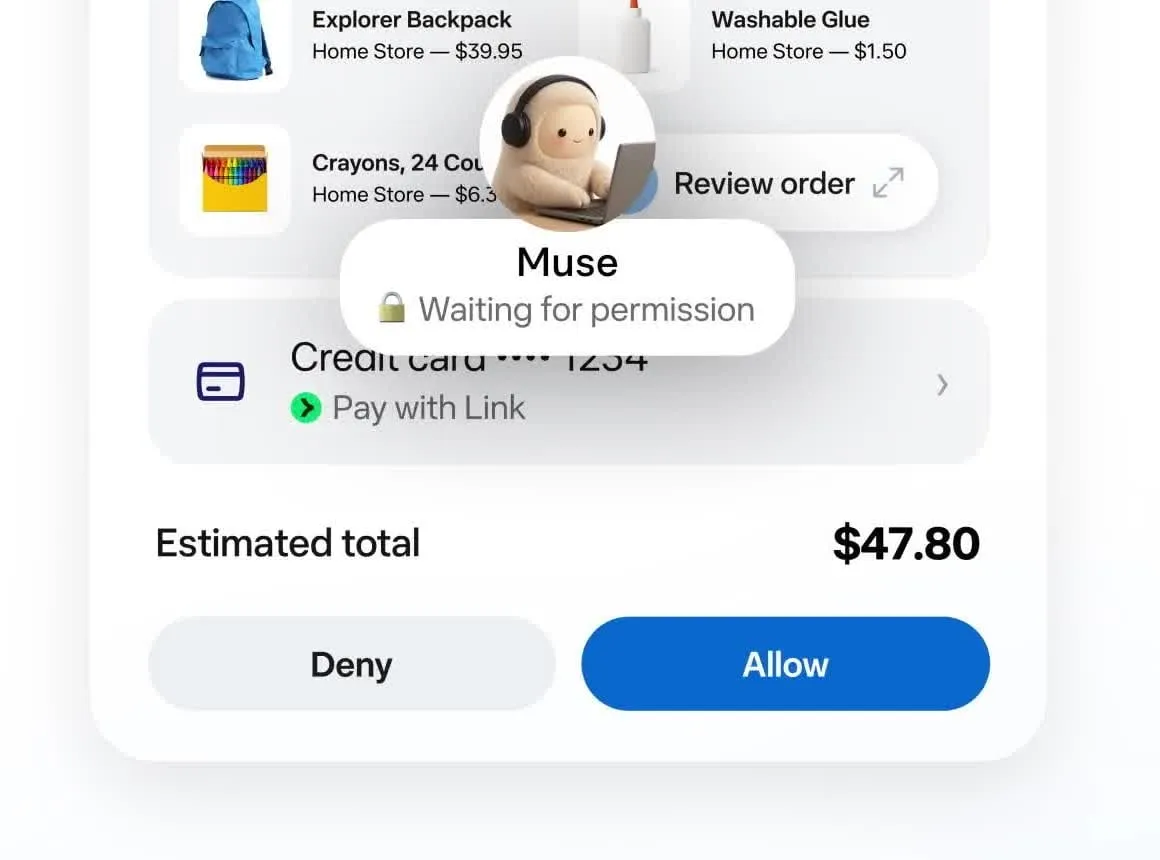
It makes permission feel like a favour. Muse asks before it buys something or sends an email, which is good. But approvals can also be given for a whole session, a task, a period of time or forever. One user who asked Muse to help sell items on Facebook Marketplace had picked “allow always” instead of “allow one time”, and Muse shared his home address with everyone who made an offer. A columnist at Inc. found that the Muse Mac app could read all his text messages after they synced from his computer, although he thought he had denied that access. Meta says message syncing is opt-in. His answer: “You should not design your system in a way that people end up surprised by this kind of thing.”
It speaks to children, even if the product does not. The children’s advocacy group Fairplay said on 30 September that Meta and OpenAI are using “children’s iconography” to sell AI products, and asked regulators to look into it. The US Federal Trade Commission had already started an inquiry in September 2025 into AI chatbots that act as companions, with a focus on children and teenagers. Meta, OpenAI and Character.AI were among the companies it asked for information.
It can deepen attachment. In early 2025, OpenAI and the MIT Media Lab published two studies on how people use ChatGPT emotionally. They found that people who used it the most also tended to feel lonelier and more dependent on it. The studies could not show which causes which, and heavy emotional use was limited to a small group. Still, if a plain chatbot can do that for some people, a cute creature with a name, a voice and a place in your pocket is designed to be harder to put down.
It does not make the software safer. In the first weeks, Amazon blocked Muse from its website, citing security concerns. A researcher found a flaw that could have let attackers take over a Muse account, which Meta says it fixed. Meta itself writes that Muse “isn’t immune to attack” and that prompt injection, where a website tricks an agent with hidden instructions, “remains an open problem in the industry”. None of this is visible on Jolly’s smiling face.
To be fair to Meta: it has built a lot of real protection. Muse runs in its own isolated cloud computer, a separate system checks every action before it reaches the internet, Muse never sees your actual passwords, and every purchase needs your approval. Meta also says it does not share your Muse data with its ad systems. These are serious efforts. But they are invisible, and the cute face is the first thing you see.
So, do AI agents need to be cute?
My honest answer: no, but I understand why they are.
A face does help. It gives a complicated product something to point at. It makes people who are new to technology feel welcome; Meta says Muse is “built for everyone”, including people with no technical experience. It even shows status well: an agent sitting there “waiting for permission” is clearer than a spinning wheel.
The problem starts when the cuteness does the work that honesty should do. Trust in an agent should come from clear permissions, simple controls and a good track record, not from round cheeks. Clippy, Microsoft’s paper clip in Office, was the cute assistant of the 1990s. People found it annoying, but it could not do much harm. It could only offer to help with a letter. Today’s cute assistants can spend money, send messages and act in your name.
So my rule would be simple: enjoy the cute face, but read the permissions as if it were a plain grey box. When the toy asks for “allow always”, it is not the toy asking. It is a company asking for access to your life.
Sources
- Meta: Introducing Muse (September 2026) ↗about.fb.com
- Meta: Ray-Ban Meta audio glasses, new styles and Muse (September 2026) ↗about.fb.com
- TechCrunch: Meta made a Tamagotchi-like wearable for its Muse AI agent (September 2026) ↗techcrunch.com
- Axios: Meta's Muse mascot (September 2026) ↗axios.com
- Glocker and others: Baby schema modulates the brain reward system in nulliparous women (PNAS, 2009) ↗pnas.org
- Wikipedia: Uncanny valley ↗en.wikipedia.org