The tiny chips that stopped car factories
· 4 min read
This summer, at the Kentucky Speedway, a race track in the United States, the cars on site were not racing. The grounds were full of brand-new Ford pickup trucks. Thousands of them. They are almost finished, but they cannot be sold, because they are missing a few chips.
Meanwhile, a PlayStation 5, launched almost a year ago, is still close to impossible to buy at a normal price. Graphics cards sell for far above their official price. And car dealers have half-empty showrooms.
All of this comes down to the same thing: the world has run out of computer chips.
Chips are everywhere now
When people hear “chip”, they think of the processor in a laptop or phone. But chips are in almost everything with a plug or a battery: washing machines, toothbrushes, routers, and especially cars.
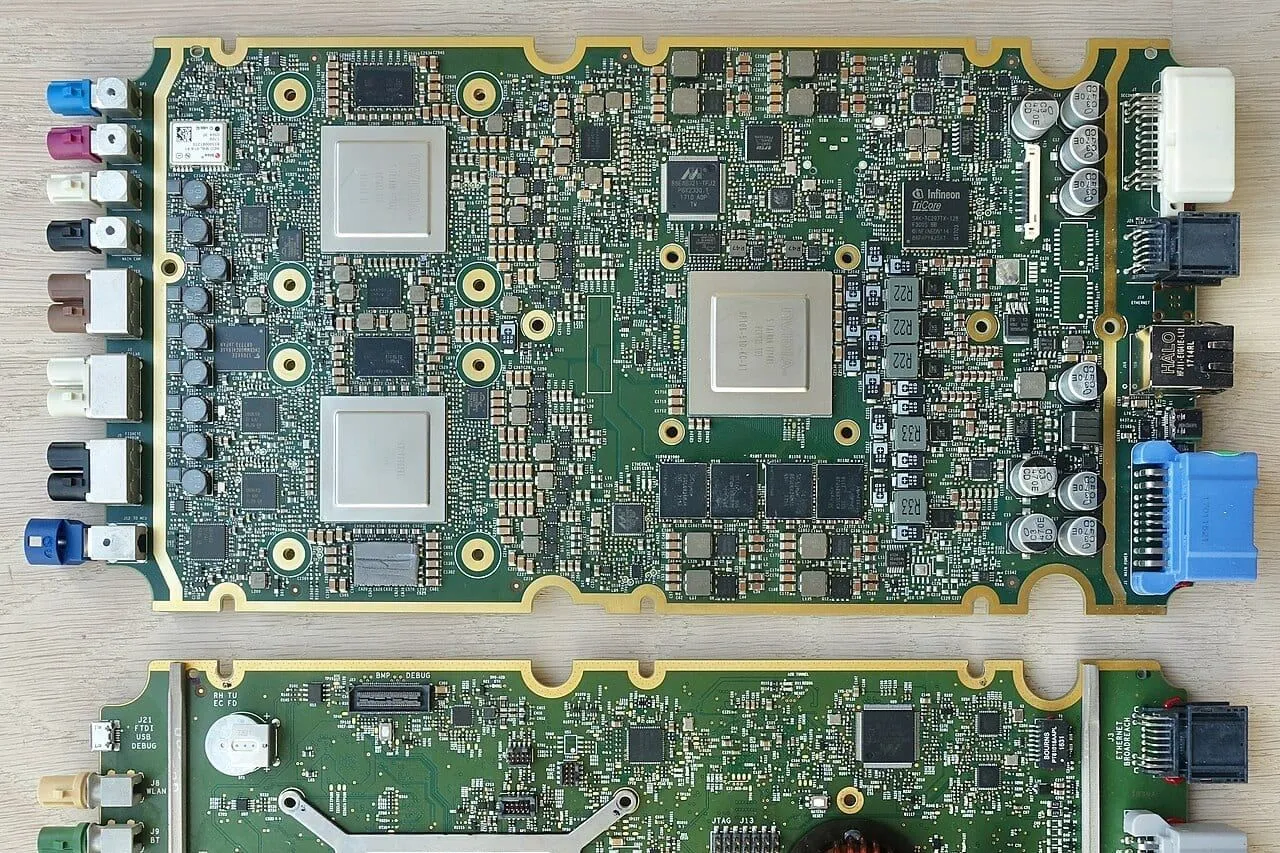
A modern car has somewhere between about 1,400 and 1,500 chips, and some have up to 3,000. They control the engine, the brakes, the airbags, the windows, the seats and the screens. Many of them are simple and cheap. But if one is missing, the car cannot leave the factory.
How it started: everyone guessed wrong
When the pandemic began in early 2020, car makers expected people to stop buying cars. So they cancelled their chip orders.
At the same time, everyone else started buying electronics. People needed laptops to work from home, webcams for video calls, tablets for home schooling, and games consoles because there was nothing else to do. Chip factories happily gave the capacity the car makers had cancelled to the electronics companies.
Then, later in 2020, car sales came back faster than expected. The car makers went back to the chip factories and asked for their chips. The answer was: sorry, we are full.
Chip factories cannot simply produce more. They run around the clock already, and building a new one takes years and billions of dollars.
Then everything else went wrong too
As if that was not enough, 2021 brought a series of disasters, one after the other:
- February: A rare winter storm in Texas cut the power to three chip factories in Austin, owned by Samsung, Infineon and NXP. Chip production is extremely sensitive, and restarting is not like switching a light back on. It set them back by months.
- March: A fire broke out at a factory of Renesas in Japan. Renesas makes about 30% of the microcontrollers used in cars worldwide. It said getting back to normal would take at least 100 days.
- Spring: Taiwan, home of TSMC, the world’s biggest chip maker, had its worst drought in over half a century. Chip making needs huge amounts of very pure water.
- Summer: Covid lockdowns in Malaysia, where many chips are tested and packaged, slowed things down further.
It is the kind of list that would be rejected as unrealistic in a risk management training.
How bad is it?
Very bad for car makers. In September, Toyota said it would cut its global production that month by 40%. General Motors stopped most of its North American factories for a week or two.
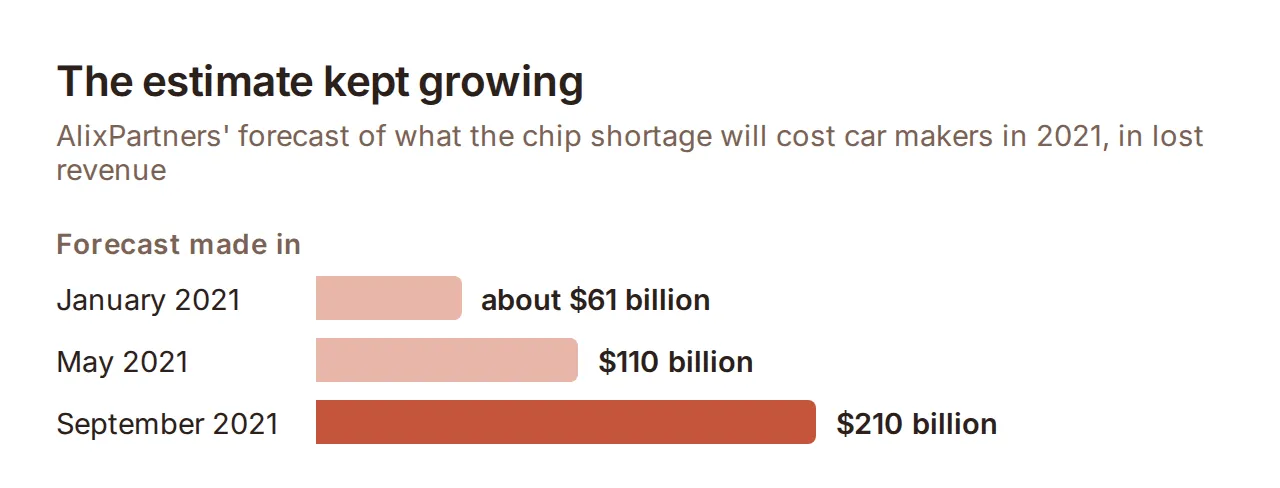
The consulting firm AlixPartners now estimates that the chip shortage will cost the car industry about $210 billion in lost revenue this year, and that 7.7 million cars will not be built. In May, its estimate was half that.
For everyone else, it means waiting longer and paying more. Sony has warned that PlayStation 5 supply will stay tight into next year.
The bigger problem: everything in one place
The shortage has also shown how concentrated chip making is. TSMC alone made more than half of all chips produced for other companies last year, and most of the world’s most advanced chips come from Taiwan.
Governments have noticed. In February, the US government started a review of its chip supply chains, and in April, President Biden held up a silicon wafer in a meeting with company bosses to make the point. In September, the European Commission announced a European Chips Act to bring more chip production to Europe. Intel and TSMC have both announced new factories in the US.
But those factories will take years to build. They will not help anyone buy a car this Christmas.
What I think
As a mechanical engineer, I find this story fascinating, because it is not really a technology story. It is a planning story.
Car makers have long run on “just in time”: parts arrive exactly when they are needed, so nothing sits in a warehouse costing money. It is efficient, and it works beautifully, until it does not. Cancelling chip orders in 2020 looked like a smart way to save money. A few months later, it was the most expensive decision of the year.
There is a project management lesson in that. Optimising for the normal case is easy. The real question is what happens in the bad case, and how quickly you can recover. A buffer looks like waste on a spreadsheet, right up until the day it saves the whole project.
I also think Europe should look at this year very carefully. German car makers, the pride of the country’s industry, have had to stop production lines because of chips that mostly come from Asia. The European Chips Act is a good idea. But building chip factories takes many years, and an announcement in September 2021 is, honestly, a few years late.
The other lesson is about small things. Nobody plans a car around a microcontroller that costs a few dollars. But an expensive pickup truck still cannot leave the factory without one. The smallest part on the bill of materials can be the one that stops everything.